Tuesday, April 25, 2006

Customer Service is Job #1


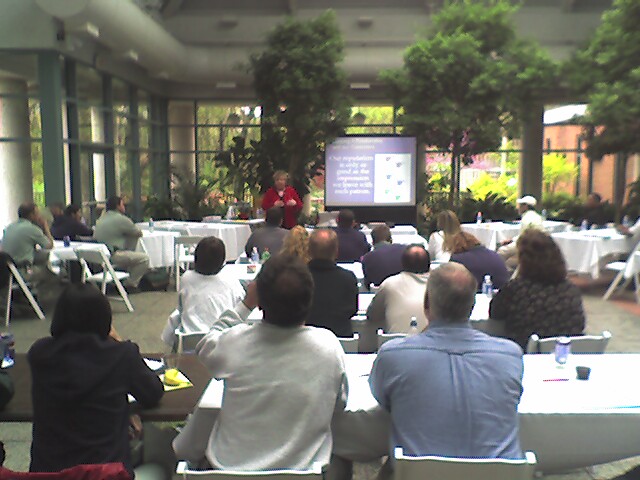
Everyone that work in parks is in the customer service business. To hone our skills in this area, the Regional Park Authority brought in a national expert in customer service and supervisory skills to do a one day training with our staff and park employees from many of our member jurisdictions. Ruby Newell-Legner has done training with over 300 park organizations nationally and many public and private clients world wide. Below is just a small sample of the materials she shared with us.

RUBY NEWELL-LEGNER, CSP
9148 W.Vandeventor Dr. 􀂋 Littleton, CO 80128 􀂋 Phone (303) 933-9291 􀂋 Fax (303) 904-2966 􀂋 E-Mail: Ruby@RubySpeaks.com 􀂋 www.RubySpeaks.com
Making Customer Satisfaction EverybodyÂ’s Business

Problem Solving -
Anticipate problems and solve them proactively before they happen
Plan goals around the future - figure out what you donÂ’t know so you can develop your skills
Put out fires in the infant stage
Focus on the "Big Picture" approach to handling problems when your supervisor is unavailable
When there is a crisis - deal with it calmly and demonstrate positive leadership
Bring two possible solutions and a recommendation with every problem or situation
Develop alternative approaches to problems and pinpoint solutions that appeal to everyone
Organization -
Work smarter not harder - set priorities - plan your day and live it - stay focused
Become a “Power Planner” and improve productivity by spending 10 minutes a day planning
Identify time-wasters and evaluate how to eliminate them
Determine specific routines that smooth out peak and slack periods and help you get more
control over your workday, every day
Control interruptions
Predetermine intermediary deadlines to insure meeting deadlines and demands
Prioritize the workload - even when everything needs to be done right now
Handle multiple projects by prioritizing - Smooth out the workload
Say “yes” only when it is reasonable and realistic
Communication -
Select the best response when others criticize your supervisor or your organization
Become a "buffer" between adversaries without being trapped in the middle
Communicate when you are ready for more responsibility
Present your problem solving ideas in a way that earns credibility and respect
Keep your supervisor informed without being a gossip or a tattle-tale
Relay constructive criticism without it being taken personally
Leave professional impressions throughout the organization
Deal with Office Politics and avoid being caught up in it
Be discrete in sharing information and handling confidential material
Customer Service -
Get to know your customers - Demonstrate an interest in their lives
Take every opportunity to call the customer by name
Acknowledge a customerÂ’s presence by the time they get within two feet
Interrupt any conversation if you are talking to a co-worker so the customer knows that they are
their first priority
Listen and acknowledge that you are listening to the customers
Double check orders for accuracy
If delivery is not going to be when you promised, call the customer immediately to inform them
Assist customers in learning about how a product or service works
Look for the opportunity to add value to each transaction
Manage/Supervise -
Take charge and demonstrate initiative without appearing overbearing and pushy
Identify difficult employees and redirect them with swiftness and ease
Prevent misunderstandings and increase efficiency by giving clear instructions and
having staff repeat back information to make sure that they understand it
This is the form I shared with Lisa
Skills that she
needed to develop
to move to the next
level in her career

Tuesday, March 28, 2006

Fostering Creativity and Team Work

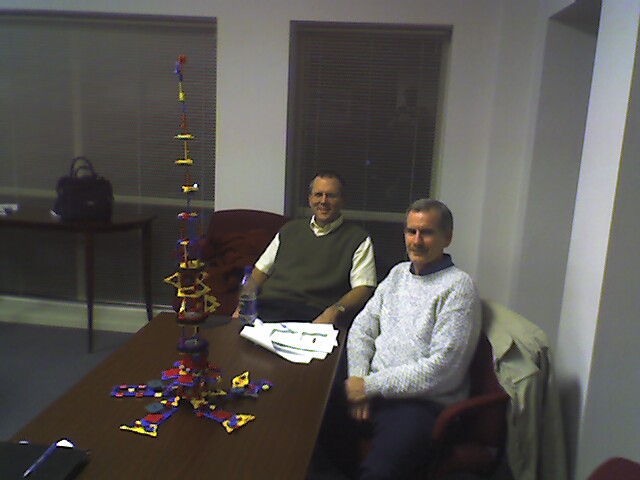
[Todd Hafner, and Paul McCray using their creativity during one of the Seminars]

Over the last six months I have been going through a UVA seminar series on leadership skills with some of the other senior management at the Regional Park Authority. Paul McCray, Director of Operation, Todd Hafner, Director of Planning and Development, and Steve Bergstrom, Director of Finance and Budget have all been taking these seminars with me.

The Northern Virginia Regional Park Authority is very unique among park agencies in that we generate 80% of our operating funds through enterprise revenues. This makes us something of a hybrid organization, on one hand, we have a mission to serve the public, providing recreational and educational opportunities, as well as conserving natural and historic resources, and on the other hand we have the practical challenge of generating most of our operating revenue internally.

I find our entrepreneurial nature very exciting. We are challenged to be nimble and creative, and to always look for new opportunities that can help us achieve our mission and bring in the enterprise revenue that has made us one of the least taxpayer dependent park agencies in the nation. Participating in the leadership seminars is just one of the many way we are working to keep our organization creative and entrepreneurial.

The description of this series taught at the Falls Church office of UVA is as follows:
Leadership Seminar Series
Today's business environment remains as competitive as ever and challenges the most effective managers to become exceptional leaders. UVA continues its leadership series and provides managers with skills to navigate the challenges that lay ahead by concentrating on versatile leadership and discovering ways managers become exceptional leaders. By concentrating on versatile leadership techniques, managers will be able to tactically enhance their leadership skills in communicating with diverse audiences, maintaining highly effective teams, identifying and understanding leadership roles, and understanding the importance of shared leadership and team-decision making.Seminar Leader - Dave Minionis has extensive experience in professional and organizational effectiveness. He plays an integral role as a trusted business advisor to many clients to determine their specific needs, adapts training programs, interventions, and change efforts to fit their requirements. His experience in developing leadership competencies, management capabilities, and organizational and team effectiveness brings a unique perspective to many organizations. His expert teaching techniques are known for fostering an interactive, engaging, and fun learning environment.
Required Courses:
Becoming a Versatile Leader
Leadership and Influence
Leading Change
Persuasively Presenting Your Ideas
Trail Blazing with Teams
Inspiring Creativity

Thursday, March 09, 2006

Excellence Rewarded at NVRPA


For the first time the Regional Park Authority gave performance awards for our many heros that make NVRPA such a great organization. The awardees were nominated by their peers, and selected by a cross functional team of employees. These great public servants demonstrated innovation, team work, dedication and great 'can do' attitudes.


Jim Bartlinski

In the categories of Above-and-Beyond, Cost Saving and Programming, for the low-cost development of an innovative program interpreting death rituals of the 18th century entitled Death Comes to Carlyle House, and for generating a tremendous amount of publicity for NVRPA by staging a mock funeral procession for John Carlyle as part of the interpretive program.

Gary Becht

In the category of Innovation, for the establishment of a program to save manpower through the use of more efficient and modern maintenance equipment and reductions in mowing areas. The plan also resulted in expanded and improved wildlife habitat areas at Meadowlark Botanical Gardens.

Todd Benson

In the categories of Above-and-Beyond, Innovation and Team Player, for developing new marketing programs and protocols at Algonkian and Cameron Run, assisting with the cross-promotion of various facilities throughout NVRPA, and an outstanding “can-do” attitude.

Tony Blevins

In the category of Versatility, for generating outstanding golf course improvement ideas, working day or night whenever necessary, and fostering good morale and team work among his employees.

Claire Blanchard

In the categories of Above-and-Beyond and Innovation, for initiating the water-trail concept along the Occoquan and Mason Neck properties, promoting the project and garnering widespread support, and obtaining a $100,000 project grant from the National Park Service.

Derric Bolton

In the categories of Above-and-Beyond, Safety and Team Player, for implementing the NASCO safety and training program, consistently encouraging safe operating procedures amongst all staff, and helping NVRPA to reduce on the job injuries resulting in significant reductions in workers’ compensation premiums.

Mary Ruth Coleman

In the category of Innovation, for obtaining a $50,000 grant from the Institute of Library Services and assisting in the development of an outstanding documentary titled Paper & Stone, about the life of John Carlyle. The film has been shown on public television and has lead to widespread publicity for the Carlyle House and NVRPA.

Brian Hennesy

In the category of Customer Service, for his devotion and dedication to the rowing community at Sandy Run, his exceptional ability to coordinate and satisfy the needs of numerous park users and interest groups, and his work to significantly improve NVRPA’s relations with its park neighbors.

David Horgan

In the category of Innovation, for immediately taking on the project to replace the washed-out Bull Run/Occoquan Trail Bridge over Cub Run, designing the new structure and footings, and devising a method to secure the bridge and protect it during future floods.

Dan Iglhaut

In the categories of Above-and-Beyond and Cost Saving, for taking the initiative to seek out and apply for grants to help improve our parks and to free up limited capital dollars, and for successfully obtaining five grants totaling $424,000 for projects such as W&OD Trail widening and repaving, W&OD wayside shelters, and the Upton Hill to W&OD connector trail.

Julie Kutruff

In the categories of Above-and-Beyond, Customer Service and Innovation, for implementing new ideas at Upton Hill such as family swim night, weekly concerts and miniature golf tournaments; creating a sense of community at the park and increasing public awareness of NVRPA and what it has to offer; and spearheading a major project to eradicate invasive plant species from the park.

Bernard Kye

In the categories of Above-and-Beyond and Customer Service, for his willingness to “go the extra mile,” working well beyond his normal hours whenever necessary, and doing whatever it takes to serve the customers of Pohick Bay Regional Park.

Diana Lancaster

In the categories of Customer Service and Team Player, for unselfishly helping out wherever needed as the accounting department went through significant changes, her attention to detail leading to high marks on NVRPA’s annual audits, and her outstanding positive attitude.

Martin Ogle

In the categories of Above-and-Beyond and Programming, for sharing his knowledge and resources throughout all parks, working extra hours to conduct bluebell walks at Bull Run and canoe trips at Pohick Bay, and for creating and presenting outstanding interpretive programs and planning special events that have generated great publicity for Potomac Overlook and NVRPA.


Susan O’Reilly

In the categories of Above-and-Beyond, Innovation, Team Player and Versatility, for continually identifying and implementing new ways to keep her department organized and functioning efficiently, volunteering to learn a new software program outside of normal working hours and creating an Access database for thousands of W&OD project files, managing the document retrieval and identification process for several major legal proceedings, and generously helping out in all areas of the organization.


Becky Reynaldo

In the category of Versatility, for successfully taking on the challenge of integrating a trend-based budget into the accounting system, which has enabled staff to more accurately measure financial performance and make budget projections, and for major contributions while helping out in all areas of the accounting department during personnel changes.

Max Reed

In the categories of Above-and-Beyond, Cost Saving and Versatility, for continuing to improve his skills and abilities through classroom training and interaction with other HVAC professionals, and creating a preventative maintenance program that will reduce major equipment repair expenses at all of NVRPA’s facilities.

Mark Riddell

In the categories of Above-and-Beyond and Innovation, for outstanding marketing efforts that led to a record number of positive news articles published in the summer of 2005, developing a new annual report and park brochures, and working with a variety of staff to develop improved marketing strategies while fostering a strong team spirit.

Kate Rudacille

In the categories of Above-and-Beyond and Team Player, for her outstanding efforts in helping lead NVRPA in its successful telecommunications lawsuit with Dominion Virginia Power, guiding the Park Authority through three complex State Corporation Commission proceedings concerning the possible placement of electric transmission lines on valuable parkland, and completing all her other varied duties with the utmost professionalism and dedication.

James Short

In the categories of Above-and-Beyond, Innovation and Team Player, for recognizing that rustic rental cabins would generate significant revenues and be a great service to the public, obtaining project funds by justifying the value of the cabins through the development of proposed capital and operating budgets, acquiring building permits, and helping manage the project to a successful completion.


John Sims

In the categories of Safety and Team Player, for helping to successfully establish the NASCO safety and training program at NVRPA, helping to develop new safety protocols at all park swimming pools, and being a dedicated and outstanding instructor of new lifeguards.


Keith Tomlinson

In the categories of Above-and-Beyond, Cost Saving and Customer Service, for managing NVRPA’s most successful private fundraising operation, attracting more individual donations than any other park, creating a strong membership base, and implementing a major donor campaign.

Jill Vanden Heuvel

In the category of Customer Service, for her outstanding efforts to represent the Park Authority in a highly professional manner, going the “extra mile” to meet the needs and satisfy the requests of all park visitors, and fostering and maintaining positive relationships with park neighbors.

Ray Midkiff

In the categories of Above-and-Beyond and Cost Saving, for working around the clock as necessary to ensure that the golf course was maintained in the best possible condition during some of the most severe and erratic weather conditions that have been encountered in many years.

Tom Carr

In the categories of Above-and-Beyond and Cost Saving, for working around the clock as necessary to ensure that the golf course was maintained in the best possible condition during some of the most severe and erratic weather conditions that have been encountered in many years.

Larry Hunter

In the category of Cost Saving, for developing and implementing equipment operator training programs and preventative maintenance procedures that have resulted in a reduction in the number of accidents and equipment failures and lowered overall maintenance costs.

Mark Whaley

In the category of Customer Service, for his dedication to improving the Bull Run Shooting Center and making customer service and safety the top priorities, creating a successful Friends group to help support the shooting center, and maintaining an outstanding positive attitude.

Dennis Showalter

In the category of Versatility, for willingly and cheerfully being the “jack-of-all-trades” and an outstanding ambassador for Upton Hill, and taking on every challenge presented to him to better the Park Authority even if the work is outside of his prescribed duties.


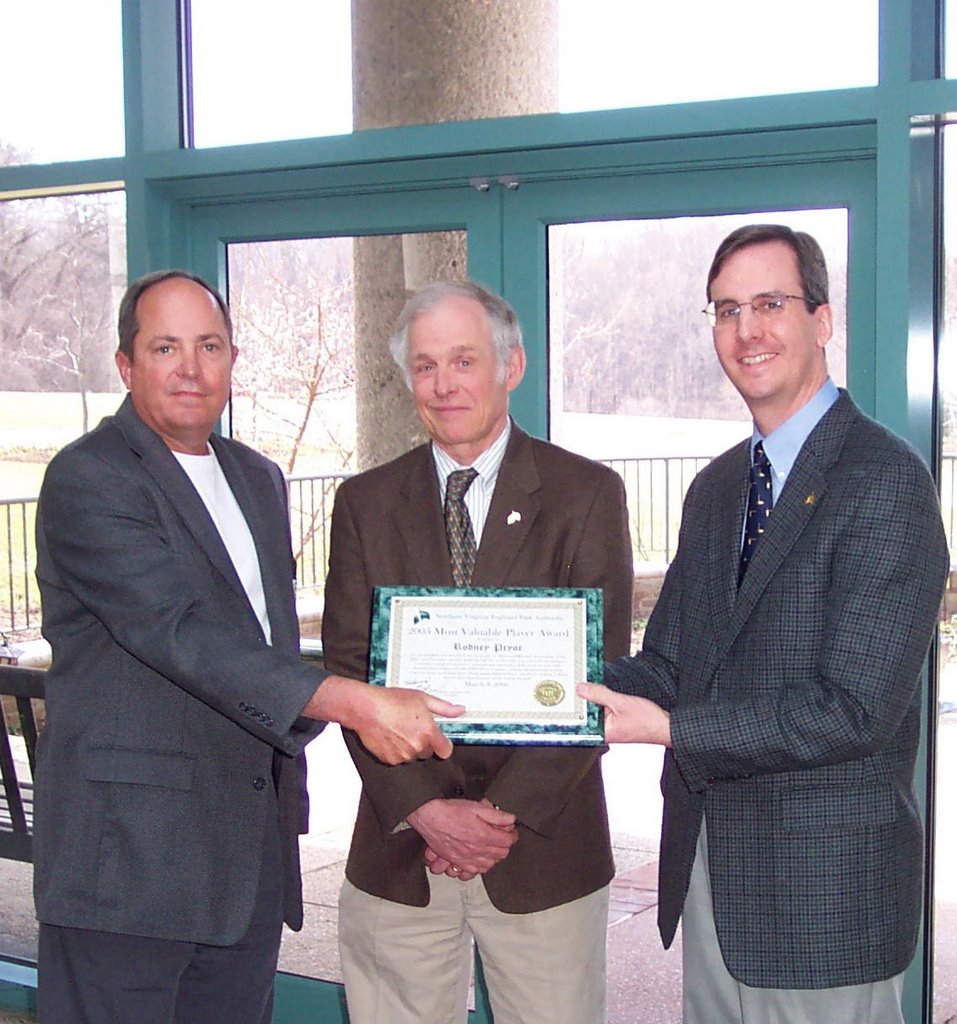
Rodney Pryor – Most Valuable Player


For outstanding achievement in the categories of Above-and-Beyond, Innovation, Team Player and Versatility, and for being on call 24/7 most of the year and never hesitating to respond to needs for assistance, planning and managing a golf course membership program generating more than $300,000 in revenues, seeking out and implementing creative revenue generating ideas during tough financial times, and always striving to boost morale and maintain good spirits among his staff.


Bull Run Marina/Fountainhead/Sandy Run - Most Improved Financial Performance Award

For increasing the parks’ net financial performance by 106 percent in Fiscal Year 2005.
Friday, February 10, 2006

Teddy Roosevelt & the creation of parks

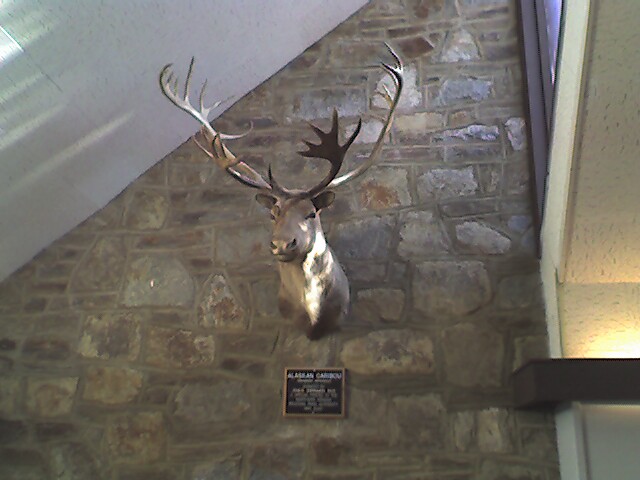
Game Trophies of Teddy Roosevelt
On display at Bull Run Regional Park


Teddy Roosevelt was our greatest conservation President. He created the National Park System, National Forests and the National Wildlife Refuge System. In all, Roosevelt is credited with conserving 230 million acres during his presidency. His passion for the land is clear in the quotes from Roosevelt below.

"In utilizing and conserving the natural resources of the Nation, the one characteristic more essential than any other is foresight.... The conservation of our natural resources and their proper use constitute the fundamental problem which underlies almost every other problem of our national life."

Address to the National Editorial Association,
Jamestown, Virginia, June 10, 1907
.

"...All the great natural resources which are vital to the welfare of the whole people should be kept either in the hands or under the control of the whole people."

The Outlook, April 20, 1912

"Birds should be saved for utilitarian reasons; and, moreover, they should be saved because of reasons unconnected with dollars and cents. A grove of giant redwoods or sequoias should be kept just as we keep a great and beautiful cathedral. The extermination of the passenger-pigeon meant that mankind was just so much poorer .... And to lose the chance to see frigate-birds soaring in circles above the storm, or a file of pelicans winging their way homeward across the crimson afterglow of the sunset, or a myriad of terns flashing in the bright light of midday as they hover in a shifting maze above the beach-why, the loss is like the loss of a gzlilery of the masterpieces of the artists of old time."

A Book-Lover's Holidays in the Open (1916).


TR came to conservation first as a lover of the outdoors. Roosevelt was passionate about camping, hunting, fishing and exploring. This love of nature led him to use his leadership to preserve our natural heritage. Through the creation of the National Park System, Roosevelt started the movement that has lead to all the park systems we know today.

With this legacy, it is appropriate that the Northern Virginia Regional Park Authority has on display at Bull Run Regional Park some of the game that Teddy Roosevelt himself bagged.

Bull Run Regional Park is the first parkland that the Northern Virginia Regional Park Authority acquired in 1960. Today this park has a wonderful campground, many picnic areas, play grounds, a pool, special events center, and shooting center. This spring rustic cabins will be available to rent in the campgrounds. This park is also the trailhead for the Occoquan trail, a 17.5 mile nature trail along the Bull Run/Occoquan River.

Come to Bull Run Regional Park, see the game that Teddy Roosevelt bagged and start or energize your own journey in TR's foot steps.

http://www.nvrpa.org/bullrunpark.htm

[Roosevelt game trophies are on loan from the Smithsonian Institute]


Monday, February 06, 2006

First Chairman of NVRPA was one of the great conservationists

[The following background on Ira Gabrielson was written by Bill Dickinson, the current Chairman of NVRPA]

Dr. Ira Gabrielson (1889-1978), NVRPA’s first Chairman (1959-1975) and thereafter NVRPA Chairman Emeritus, was a man who in the often heard phrase coined by the environmentalist Rene Dubos “Think Globally, Act Locally” acted and thought both globally and locally. A world-renowned ornithologist, he became the first Director of the US Fish and Wildlife Service in 1939. During his tenure there was a four-fold expansion of the National Wildlife Refuge System, establishment of the Patuxent Research Station, and passage of the Bald Eagle Protection and the Federal Aid in Wildlife Restoration Acts. Upon retirement from Federal Service in 1946, he became the President of the Wildlife Management Institute (1946-1970). He also helped organize and became president of the World Wildlife Fund in the US and helped found the International Union for the Conservation of Nature and Natural Resources. He frequently testified before Congress on a wide range of environmental issues including clean water, wildlife, endangered species and pesticide legislation and efforts to establish preserves to provide habitat for wildlife across the nation and around the world. As active as we was nationally and internationally, Dr. Gabrielson had a special passion for preserving large and environmentally important tracts of land in Northern Virginia as open space for protection of wildlife and the enjoyment of the public. Caring little about what public agency had jurisdiction over such lands, he was instrumental in the creation of the Fairfax County Park Authority (1950), and an advocate for Virginia State parks. In 1963, he was Vice Chair of Virginia Outdoor Recreation Study Commission which set forth an ambitious plan for State and regional parks in Virginia.

During Dr. Gabrielson’s period of leadership, by 1973 NVRPA’s land holdings grew to 6,430 acres including most of Bull Run Regional, Bull Run Marina, Fountainhead, Pohick Bay, Potomac Overlook, Occoquan, Upper Potomac properties and Carlyle Historic Park. About 53 % of the funds for land acquisitions came from the member jurisdictions and about 39 % from Federal and State sources.

He was posthumously named to the National Wildlife Federation’s Conservation Hall of Fame although in the many descriptions of his incredible life, scant attention is given to his work at the Virginia and regional level, land he remained passionate about to the end of his life.

One of his quotes perhaps most applicable to NVRPA in 2006 is:

“The conservation battle cannot be a short, sharp engagement, but must be grim, tenacious warfare—the sort that makes single gains and then consolidates these gains until renewed strength and opportunity makes another advance possible.”
The following is a May 9, 1960 speech Dr. Gabrielson delivered to the Virginia Citizens Planning Association in Richmond Virginia. Used by the special permission of the Smithsonian Institution Archives, Washington DC and is found in record unit 7319, box 13, folder 64.

OUR OPEN SPACE
by
Ira N. Gabrielson

(Address to the Virginia Citizens Planning Association,
Richmond, Virginia, May 9, 1960)


Within the past few years we have heard much about the subject of space, from politicians, scientists and the various media of the national press. In the public mind it has come to mean the great cosmic void that separates earth from its satellite and the planets. We associate it with multimillion-dollar gadgets that zoom out to infinity from places like Cape Canaveral or streak like meteors across the skies at night. The words “space engineer,” “spaceman” and “astronaut” have become as commonplace in the English language as “aviator” and “balloonist” were fifty years ago, and no more startling in their implication to the youngsters of today than the older terms were to me as a boy on an Iowa farm.

But in our search outward to the new frontiers of the Universe, let us not lose sight of the fact that there is another kind of space which concerns all of us intimately, and which will be of increasingly intimate concern to future generations of Americans. Regardless of the outcome of the great international space competition, man within the foreseeable future will remain an earth-based creature, even though he may, through his inventive and mechanical genius, succeed in sending a few of his representatives to the moon and beyond. The type of space of which I speak is living space and old-fashioned elbow room. In our modern civilization, with its noise, claptrap of mechanical gadgets, and burgeoning populations, it has become one of the most precious of commodities. If you don’t believe that it has economic as well as aesthetic and spiritual value, just take a look at the ads in the real estate section of the Sunday papers.

With the tremendous growth in population that has been apparent, especially in the coastal and piedmont regions of this state in the past two decades, the time has come when we must plan for space if we are going to have something more than standing room only in the near and immediate future.

To plan for space and to preserve natural areas may cost money, but it will be far less costly in the long run than attempting to create it at later dates by ripping out existing developments. This process is going on right now in Washington where much of the entire southwest section of the city is being pulled down and rebuilt on more spacious and modern lines, according to a definite plan. Personally, I feel that there is a real lesson there for all of us. When Pierre Charles L’Enfant drew up plans for the nation’s capital, he incorporated broad spacious avenues, the great swath of the Mall and a copious sprinkling of parks. Although modified in later years to some degree, this basic plan is the reason that Washington remains one of the really beautiful cities of the world more than a century and a half after it was laid out in the fields and woodlands around Georgetown. The development of southwest Washington, however, was outside the scope of the planners, at least in its execution. It simply grew, as economic and population problems spilled out of the parent city. It lacked the parks and broad well-lighted streets of the northwestern section of the city that had been built according to the original plan, and parts of it became one of the most deplorable slums in North America.

The result was that a few years ago when the planners finally did get around to southwest Washington, they could see only one solution—tear it all down and build it again from the ground up around the broad streets and open areas that should have been retained in the first place.

Sometimes as I travel through subdivision after subdivision of jerry-built suburban ramblers, split-level and Cape Cod cottages, which sprawl over landscapes unrelieved by parks or decent playgrounds, each group huddling like a group of identical chicks around a shopping center that serves as the mother hen, I cannot help but wonder if in these developments we may not be building the rural and urban slums of the future. Too many of them have no more planning than that given by the promoters themselves in their effort to crowd as many home sites into the area as the existing law will allow.

This need not necessarily be, but it will prevail without leadership in planning, and as long as the profit motive alone is permitted to dictate construction standards and the spacing of homes. In the vicinity of Washington several of the counties have become concerned with this problem and are now insisting through their zoning regulations and building permits that lots be larger, that certain areas be set aside as playgrounds and parks, and that the bulldozing of construction sites be confined to lands on which building will be constructed in the immediate future. These actions were caused by official concern over the influx of undesirable elements, and a consequent reduction in property values, as the original owners sold out and moved to the newer developments in their quest for space. If these earlier developments had been better planned in more spacious settings, the original owners would have had little incentive to move, some stability would have been provided for the community, and property values would have increased rather than declined; all of which demonstrates at least some of the hard-cash values of planning for space.

Housing developments, even those of relatively lost cost, can be attractive homes, and the proximity to a natural area can enhance both their commercial value and their appeal to sound citizens who can make a real and permanent contribution to community life. Certainly much of the juvenile delinquency that plagues public officials in urban and suburban America today can be traced directly to the lack of outlets for the release of youthful energies in the typical city and suburban environment.

For the suburban development the planners should strive to retain natural vegetation along all streams rather than permitting the construction of housing and commercial development to the water’s edge. Such areas are ideal for the creation of parks where youngsters, and older people too, can get their feet off concrete and asphalt and a little closer to nature. In the preservation of such areas through this means, there, again, are solid economic reasons even above those of attracting a better class of citizens. Traditionally, the bottomlands of rivers and streams have been considered inexpensive building sites; but permitting the construction of homes and factories in such areas can be an extremely expensive proposition in the long run. Because of poor drainage, homes and industrial plants built on low-lying areas outside the scope of existing sewage lines soon become sources of pollution, a development which either sacrifices the use of the stream for decent recreation, water supply, and aesthetic appeal or forces the community to extend sewage service to the source of contamination at a cost that is shared by other taxpayers. Secondly, such flood plain developments are wide open to damage from flooding and usually it is the taxpayer, through the municipality, county, or state, who must bail out the victims. Not infrequently a stream that has no history of flooding can run on a rampage after further development strips the cover from its banks. If zoning against construction on flood plains rather than development of flood plains had become traditional in this nation’s history. President Eisenhower would have less worries over the balancing of his budget, and the taxpayer’s load, which includes billions of dollars in flood control and flood relief projects, would be much lighter on the 15th of April.

A stream left with some semblance of natural vegetation along its banks and on its watershed and protected from pollution can become a valuable recreational asset to the community. One whose watershed is stripped bare, which is fouled with human and industrial wastes, and clogged with silt is the worst form of eyesore and often a menace to the health and safety of citizens who live within its immediate influence.

To this point, I have spoken only of urban and suburban problems; but much the same need prevails in rural areas. Although fewer people are directly involved, the regulation of development in rural areas often is more difficult than it is in cities and suburbs. Farmers traditionally and by nature are inclined to be independent in thought and action. Their general attitude is that no one is going to tell them how to run their affairs or their lands. Commendable though this sense of independence may be, it is a stumbling block in any attempt at regulating the actions of rural populations.

At the same time great strides have been made in checking soil erosion, in developing sound agricultural practices that produce more crops on available lands while enhancing the beauty and value of the farms. These steps, under the leadership of the various federal agencies, have been made, for the most part by the farmers themselves. In the past twenty years near miracles have been accomplished by the National Association of Soil Conservation Districts, the Soil Conservation Service, the Extension Service, and similar agencies in modernizing the agricultural practices of America by working with local groups. Farm ponds have been built, farms have been contoured and terraced, wildlife borders have been planted, flooding has been reduced, and the siltation of streams has been checked, all of which have direct public values as well as values to the individual farmers concerned. Beginning with the pilot watershed protection project on the East Fork of Falling River, there are now at least eight watersheds under unified local planning in Virginia. This program, to my way of thinking, represents rural planning at its highest level.

One of the greatest needs at the present time, in Virginia as well as in other states of the nation, is a well-rounded, sound plan for future multiple use of development of our major river basins, which should take into consideration all of the needs of all of the people within the foreseeable future. Agriculture, forestry, industry, residential development, water supply, both domestic and industrial, pollution control, and flood control, recreation, and the need for power all have a stake in such planning and all should be considered in any broad plan.

There has been much planning, to be sure, for the Potomac and for some of the larger rivers of Virginia, but most of those advanced to date lack coordination among the various resource uses that should be considered. Public power advocates pull one way sometimes with the backing of the Army Corps of Engineers toward high-level dams which would inundate thousands of acres of productive forest lands and some of the finest agricultural and recreational lands in the state and in neighboring states as well. Flood control advocates pull another way, and farmers and recreationalists have their own ideas on what a real program should be.

In my opinion the only sound approach to solving all of these problems is to be found in the example of the Miami Conservancy District of Ohio. Here the citizens themselves planned an overall valley development program, which included flood control as well as many features of additional public benefit—although primarily it was started to meet flood threats. The overall project has been developed successfully and operated with a minimum disturbance to the economic and recreational values of the valley. In fact, I think it has contributed substantially to both, and it has cost far less than the construction of the huge dams that would have been the alternative. It is my strong belief that we should develop a similar plan for the Potomac and other river valleys to provide the necessary water for municipal and domestic use, to provide flood control where it really is needed, and at the same time, to preserve to the maximum degree possible the scenic, historic, and outdoor recreational resources. Such a program, of course, would embody the enhancement or development of recreational opportunities and facilities to the fullest possible extent.

In starting to do this those of us in Virginia and neighboring states have one decided advantage over the citizens of Ohio when they initiated their project in the Miami River valley. We have ready at hand, in the Potomac Interstate Basin Committee, a group that operates through citizens’ committees and which already has gathered much data that could be used in developing such an overall program. I believe that this agency either could organize or spearhead the organization of further committees to develop a citizen-sponsored program. If it were well conceived, I am sure that there would be overwhelming support for it from the great majority, not only of the citizens who live in the valley itself but from the conservation organizations of the nation, who are vitally interested in what is done to this beautiful valley.

If progress of that kind can be achieved by the citizens of Ohio, there is no reason why similar progress cannot be made by the citizens of Virginia. Certainly we have as much know-how and as much operating capital. All that is needed is the will and the basic leadership.

But whatever plans are made, one of the fundamental needs of the people, and one which often is overlooked in many plans, is for recreation under natural surroundings, whether it be a quiet park in a city, where a harried office worker can get away momentarily from the frenetic bustle of modern living, to state and national parks and forests where he can really get next to nature. These things have great and often unappreciated values, which often outweigh those that can be measured in terms of dollars and cents. Those natural areas that are preserved today will draw future interest in the well-being of the citizens of Virginia.

Saturday, January 21, 2006

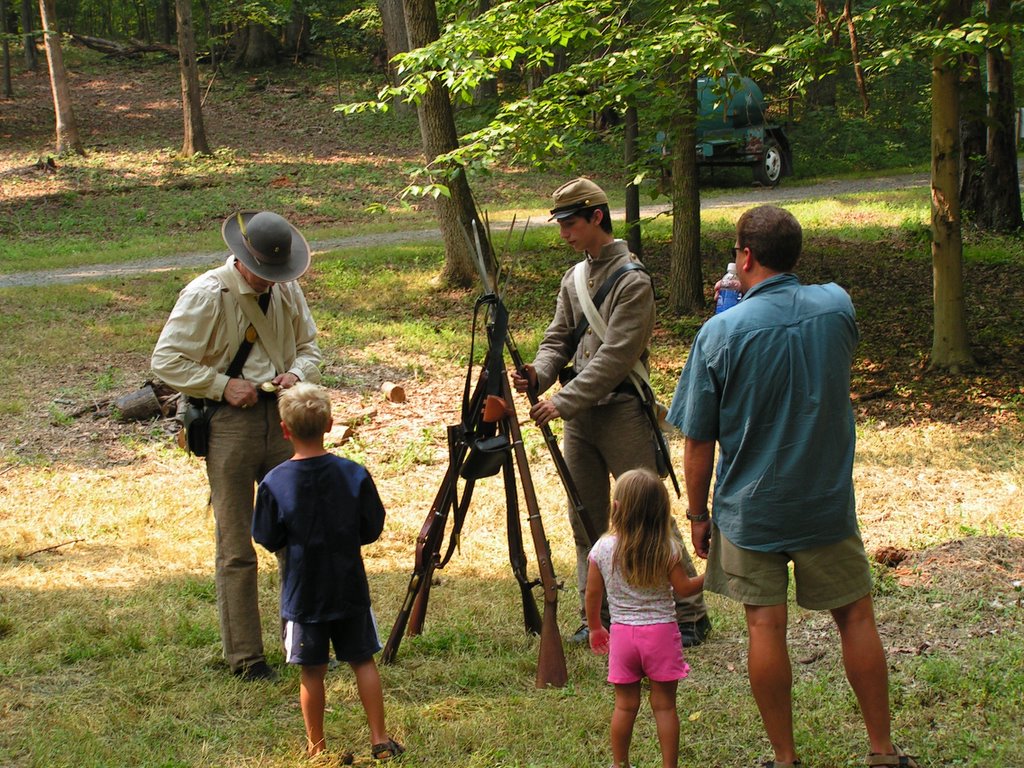
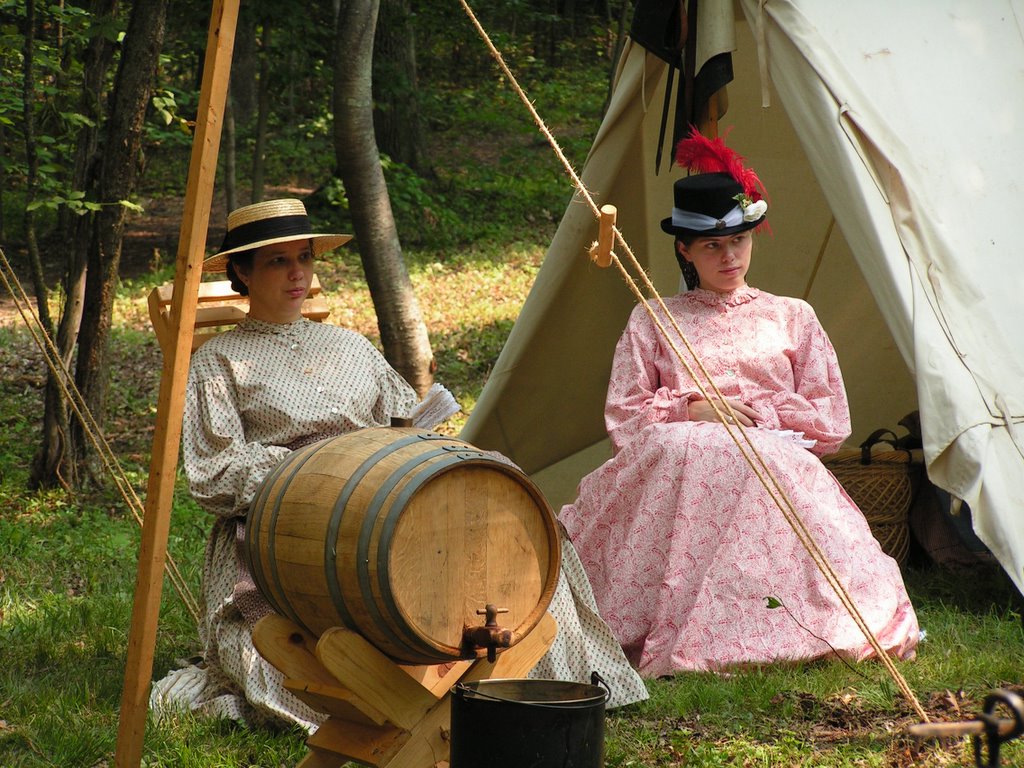
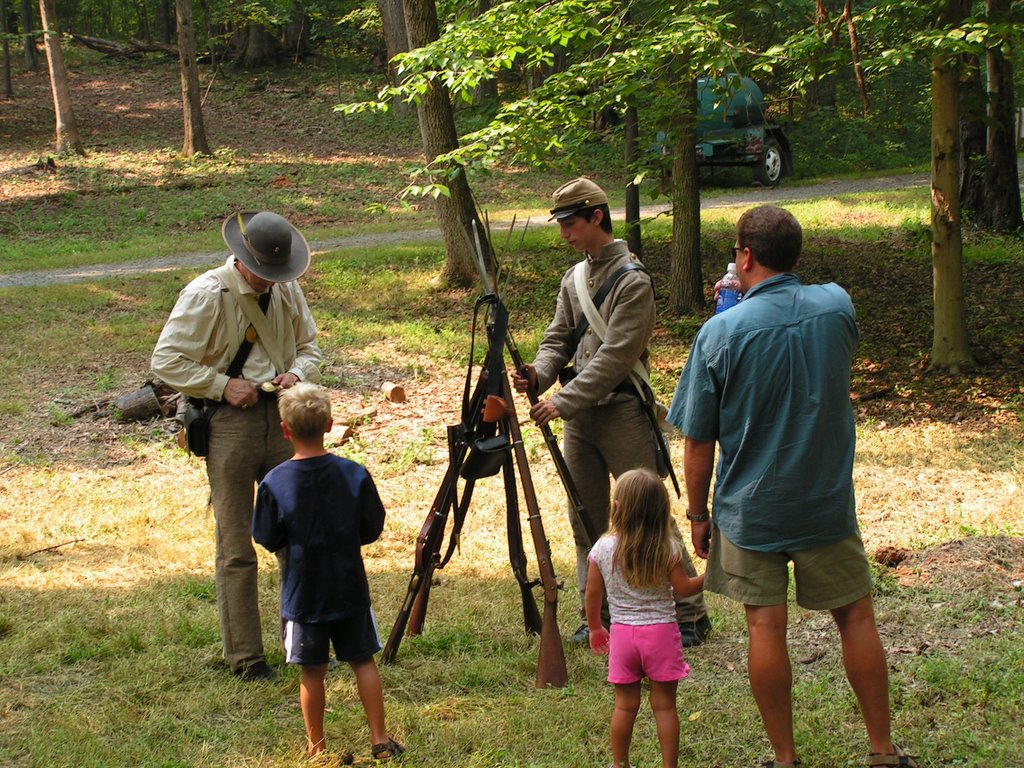
Reinactors at Balls Bluff Regional Park


The battle of Balls Bluff near Leesburg took place earily in the Civil War. When some of the dead solders from this conflict floated down river to Washington, it was one of the first times many of the political elite of the time realized that this would not be a quick or easy war.

Today the Balls Bluff Battlefield on the banks of the Potomac River is owned by the Northern Virginia Regional Park Authority. Every year reinactors come to this site and recreate some of the activities that likely took place at this time.


Strategic plan for parks is on the way

Strategic Planning Process

The board and staff of NVRPA have been engaged in a strategic planning process that has been going on for a number of months. Development of the new mission statement is perhaps the most important foundational step in this plan, since all of our programs and plans should be consistent with our mission. Other actions like adding transparency to our budget documents, working on land acquisitions, and setting a priority on energy conservation are all elements of an evolving plan for the future.

Below is a brief description of the key planning elements of this planning process:

  • Mission Statement. This document adopted by the board in October is the foundational document that the rest of the plan should relate to.
  • Vision for Park Programs. This is a one-day planning session with the management team (Assistant Park Manager and up). The purpose of this session is to develop programmatic and strategic ideas that can be used in the development of the final plan.
  • Park Needs Assessment. Over the last three years Arlington, Alexandria and Fairfax County have all contracted park needs surveys to assess the public’s interest/need for various types of park features and programs. NVRPA is contracting a comparable survey of Loudoun, Falls Church and Fairfax City. This data will be analyzed and compared to the existing data from the other jurisdictions to create a park needs assessment for our whole region. Collectively our end product will have the backing of over 3,500 interviews throughout our region. This data will give NVRPA wonderful planning tool to help guild our capital and programmatic planning.
  • Facilitated Strategic Planning Process. This will be the all important step, were the board works with a strategic planning facilitator to take the building blocks of the Mission Statement, Vision for Park Programs and Park Needs Assessment, and creates a well crafted plan for the next 3-5 years.
  • Public Hearing/Comment. This step will give us direct input on how members of the public feel about the proposed plan.
  • Plan Adoption. After the board has considered any public comments, the board should formally adopt the plan.


NVRPA Energy Conservation Policy

Goals:

The Northern Virginia Regional Park Authority shall lead by example in the field of energy conservation. We will help create a more sustainable society that is less dependent on non-renewable resources, and achieve long-term cost savings. Through energy conservation, we will be reducing the environmental and social impacts of burning fossil fuels, reducing global warming, habitat destruction, and air pollution.

Measurable Results:

NVRPA will track energy use by units of consumption for each operating location. This consumption will be compared to baseline consumption data from 2005.

For fiscal year 2007 (July 1, 2006 – June 30 2007), NVRPA will have a goal of reducing energy consumption by 5%.

Implementation:

To achieve these goals, NVRPA will examine high efficiency technologies, wherever practical. We will consider cradle-to-grave lifecycle costs of energy-dependent systems. We will total lifecycle costs and not just initial start up costs, when purchasing energy- dependent systems. We will strive to utilize a wide variety of technologies and practices, where practical, including: green building materials and methodologies, passive and active solar, geothermal HVAC, energy efficient lighting, energy efficient pumps and vehicles that use a variety of energy sources, including electric, hybrid, CNG, fuel cell and other technologies that become available, practical and cost effective.

To achieve maximum efficiency in our current systems, NVRPA will continue its policy of regular preventive maintenance of all its energy-dependent equipment and facilities. Energy conservation practices will be actively encouraged throughout the park system.

To track our progress in energy conservation, NVRPA will conduct an audit of its current energy consumption and will track energy consumption levels over time. We will seek to encourage others to reduce energy consumption by making available to the public periodic reports on our progress.

Conservation Methods:

To achieve our energy conservation goals, NVRPA will implement conservation methods including the following:

Track energy consumption

Follow Energy Star recommended practices

Perform monthly HVAC maintenance

Reduce HVAC use when not needed

Maintain proper air pressure in vehicle tires

Use high efficiency lighting

Reduce mowed areas of parks

Use green building methods and materials


How NVRPA’s Energy Conservation Plans follow EPA Recommendations:

  1. By adopting a conservation policy, the NVRPA Board has made an organizational commitment to energy conservation.
  2. Assessing current performance is documented with baseline data on energy consumption for 2005.
  3. We have set a goal of reducing energy consumption by 5% in the first year, which is tangible and achievable.
  4. The building blocks of our action plan are contained in our policy. Each operating location will develop specific implementation plans for how these goals will be best achieved.
  5. Evaluation of progress will be achieved through a new energy consumption tracking system that will be implemented by the Budget & Finance Department.
  6. Recognition of Achievement will be done through our annual employee achievement awards.

Wednesday, January 18, 2006

Think Cabins for Winter Camping Fun


It is a great time to rent a cabin, and have a camping experience with the comforts of a heated cabin with real beds. It is just the right amount of roughing it for many.

The Northern Virginia Regional Park Authority is meeting a need for all weather camping by providing rustic cabins for our campgrounds at both Pohick Bay and Bull Run. Soon there will be six cabins at each one of these campgrounds.

In December I rented one of these cabins with my family, and my Sister’s family rented a cabin next to ours. We had a great time! These cabins offer all the fun of camping with a few extra creature comforts. These offer the perfect combination for an outdoors weekend in the winter or early spring. During the summer it will be nice, because it also is air-conditioned.

Today park staff from throughout our system went to Bull Run to help prepare the areas for the cabins. We had about twenty hearty souls cutting and chipping downed pine trees that needed to be cleaned up, and doing other work to get the campground ready for the new cabins.

For more information on the cabins, check the sites for both Pohick Bay can Bull Run Campgrounds at our web site: www.nvrpa.org

Wednesday, January 11, 2006

Safety is Golden

“Safety is golden” in more than one way. First and foremost, we want our parks to be safe places for the public to come and recreate, and we want to provide a safe working environment for our employees to do their jobs.

On the financial side, when we operate in a safe manner, our insurance premiums go down, saving the Park Authority big dollars. 2005 was our safest year in recent history. We had fewer accidents and lower claims than any year going back to 1991. As a direct result of our good safety record, the Park Authority saved over $90,000 this year in reduced premiums! That is a fantastic record of achievement.

As necessary as insurance is, it is pure overhead. By reducing our annual expense by $90K, we can use that money to better serve the public.

One of the key factors to our great safety record is the rigorous training all of our lifeguards go through to get certified. In addition to our pools and water parks, our employees have been demonstrating very good judgment and an awareness of safety procedures in all of their work.

As a result of the diligent work of Derric Bolton our Safety Officer and all of the professional staff at the Regional Park Authority, we can say we are operating the safest parks we have had in many years.

Thursday, January 05, 2006

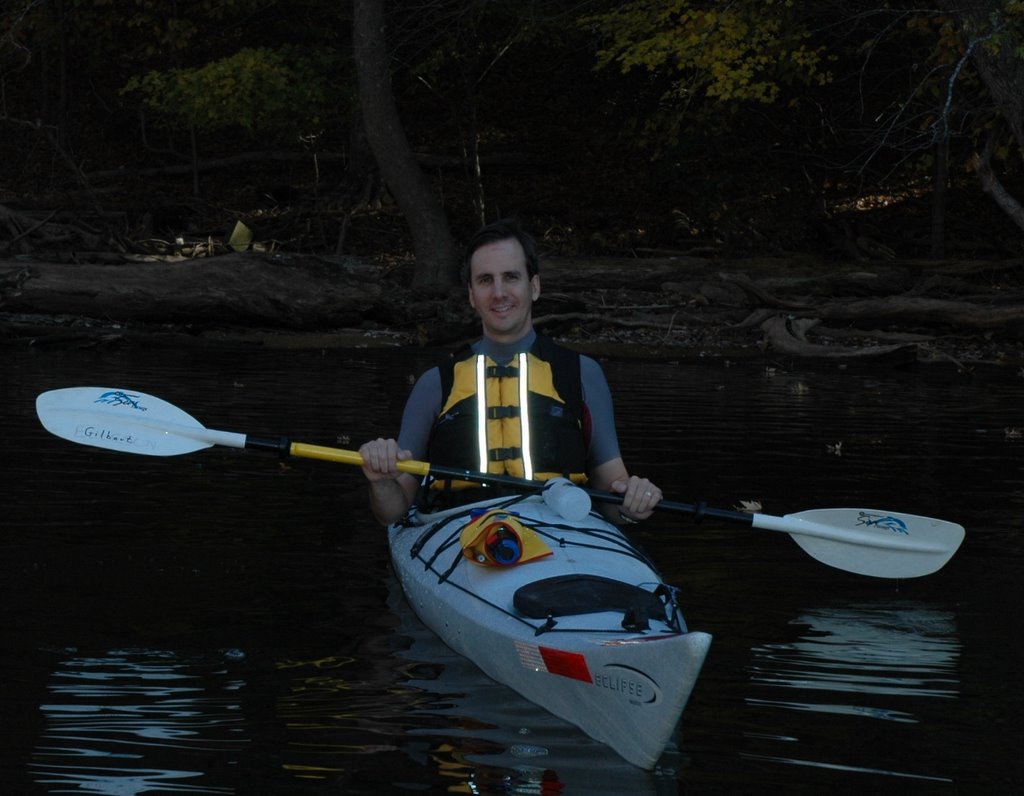
Here I am paddleing at Fountainhead


Here I am enjoying Fountainhead Regional Park in the fall

Wednesday, January 04, 2006

Land Acquisition is key to Parks

Land is at the heart of any park agency. We exist as a park agency to provide the public with places to go and recreate. Much of the land that NVRPA owns today was also acquired with an eye towards environmental protection. We own almost 5,000 acres along the Bull Run and Occoquan rivers. One of the reasons for this land to be preserved was that this body of water serves as the drinking water source for 1,000,000 local residents. We also own considerable acreage along the Potomac River that helps protect drinking water quality.

In 1961 we bought our first 537 acres, which today is Bull Run Park. NVRPA acquired new parkland almost every year through the 1960’s and 1970’s. Our pace of land acquisition slowed significantly in the 1980’s and 1990’s.

Today we are re-starting the process of growing our land. We are currently looking at a number of good opportunities. We have several landowners that are talking with us about land donations, and other that we are discussing land purchases with.

When I was with the Northern Virginia Conservation Trust we were all about acquiring open space. Most of what we did was as a result of donations of conservation easements, but we also attracted land donations and purchased land at bargain sales. This experience leads me to the understanding that where there is a will there is a way.

NVRPA got out of the habit of acquiring land for a number of reasons: our annual capital budget was not keeping pace with land values, and our aging park facilities needed greater influxes in capital to maintain them. We also saw a number of the grant funding sources that we used heavily in the 60’s and 70’s dry up. While these circumstances have not changed, what has changed is our willingness to aggressively pursue opportunities.

We may not have the Federal Land and Water money that use to help fund purchases of new land, but we do have the best state tax credit for donations of land and easements in Virginia. We also have many generous landowners that want to see a legacy of conservation, and are willing to make generous donations of land.

Seeking land donations is not new to NVRPA, Darrell Winslow, former Executive Director, was a master at cultivating land donations. As a result of his leadership, and good donor cultivation we were able to have the following parks donated:

Temple Hall – Donated by Mrs. Symington
Meadowlark Gardens – Donated by the Means family

Moving forward, acquiring new areas of parkland is going to be a high priority. I have every faith that in life you achieve what you focus on. NVRPA is going to focus on expanding our park system and as a result of that focus we will grow.

Survey will help us to understand park needs, and plan for the future

Over the next year NVRPA will be engaged in a strategic planning process as we chart a course to grow our organization as serve the citizens of Northern Virginia better. This planning process will rely heavily on two foundation's documents. One is the new Mission Statement that expresses what we are about as an agency. The second, will be a park needs assessment for the region. NVRPA has regional put out a request for proposals to survey firms to help us generate this data.

The survey is based on phone interviews with homes selected at random from our member jurisdictions. The interviewer asks the resident a series of questions about what type of park facilities members of their household most use and value. The end result of this, are statistics that we can point to with some certainty that show what the public most want out of their parks.

Over the last four years, phone interview surveys have been conducted on park needs in the City of Alexandria, Arlington County and Fairfax County. These survey were all conducted with a very similar methodology and similar questions. A copy of these survey results is available at the following web sites.

Alexandria City park needs assessment:
http://alexandriava.gov/recreation/pdfs/2_CITIZENS_SURVEY_RESULTS

Arlington County park needs assessment:
http://www.co.arlington.va.us/Departments/ParksRecreation
/forums/openspace/docs/pdf/survey_summary.pdf

Fairfax County park needs assessment:
(This park needs assessment contains only a sampling of the survey results. For a complete copy of the survey results contact NVRPA for a CD with the complete survey results.)
http://www.co.fairfax.va.us/parks/needsassessment_final.pdf


For this project we would like the following tasks to be completed by the contractor:
· Evaluate existing survey data referenced above and determine the questions that are similar enough to be compared. Use this list of questions as a template for a new questionnaire.
· Use the new questionnaire and conduct a new phone survey of homes in Loudoun County, the City of Falls Church, and Fairfax City.
· Use the existing park needs survey data from Alexandria City, Arlington and Fairfax Counties, compare it with the new survey data and do a statistical analysis for the entire region. This analysis should include information on the rankings of most needed/valued recreational amenities region wide, and differences between needs of the different member jurisdictions, if any.

When we have the final results it will be avaluablealuble planning to tool to help us know where to focus our efforts over next few years.

New Mission Statement is what NVRPA is about

For many decades NVRPA had a mission statement without much mission in it. It was very dry and because of that, we didn't use it often. But clearly we had a great mission, it just wasn't well expressed.

In 1959 when the Regional Park Authority was founded, we were set up primarily to be an open space conservation organization. Over the years we have developed a very diverse group of parks. Our focus has remained unique. One of the things that makes NVRPA different, is that in every one of our member jurisdictions there is a local park agency. These agencies focus on meeting local needs, like where will the local youth soccer team practice, and where will the neighborhood kids find a good playground. These are vitally important needs that must be met, but since there are local park agencies that focus on these needs, the Regional Park authority can focus on providing unique and truly regional park amenities. Just a few examples of amenities that are regional include, the W&OD trail which goes 45 miles and includes 4 of our member jurisdiction, and attracts millions of users each year, the Sandy Run rowing facility that provides a world class scholastic rowing venue for many high schools throughout the area, and our two family campgrounds that offer the public a great way to get outside and experience nature.

The Mission Statement recently adopted by the NVRPA Board reflects our roots as a conservation organization, and our focus on park amenities that meet a more regional need.

Mission Statement
Northern Virginia Regional Park Authority

The Northern Virginia Regional Park Authority enhances the communities of Northern Virginia and enriches the lives of their citizens through the conservation of regional natural and cultural resources. It provides diverse regional recreational and educational opportunities, and fosters an understanding of the relationships between people and their environment.

Tuesday, January 03, 2006

First remarks to NVRPA staff a new Ex. Dir. 7/18/05

Remarks to NVRPA Headquarters Staff

By Paul Gilbert on July 18, 2005

While many of our already know me, for those that do not my name is Paul Gilbert and I am the new Executive Director. I am very excited to work for such a great organization.

For five years I have been on the Park Authority’s Board, as one of the Fairfax County representatives, as a result I am very familiar with our parks, and our financial strengths and weaknesses. We have a fantastic organization, one that really serves the public well. Mr. Mess and the other founders of the Authority were true visionaries when they set up this agency on the regional model.

As the new Executive Director, I am looking forward to working with you on expanding the Authority. I would like to see us enter a new era of growth, where we are expanding our land holdings, our facilities and our programs. My guess is most of us would like to be part of a growing organization, where new ideas are encouraged, and where we all strive to achieve our goals and vision in the most efficient and effective manner.

As you may know, I was formerly the President of the Northern Virginia Conservation Trust. This was a private non-profit organization with a mission to conserve land. We conserved sixty properties throughout Northern Virginia, including about 800 acres that buffered public parkland. While our focus was natural areas, I have also been involved in some significant historic preservation efforts.

Several years ago, I initiated a recreational component of the Trust called “Adventures in Conservation” that includes regular kayak tours, guided hikes, birding, tree planting and other hands-on activities. This is all just to say, the mission of the Conservation Trust and the Park Authority are very similar: outdoor recreation and conservation of our natural and historic resources.

Another similarity is that the Conservation Trust is partially funded by Fairfax, Arlington and Alexandria. So I am very familiar with the local governments of many of our member jurisdictions.

Before the Trust, I spent almost a decade in private industry, and before that I worked in State Government. So I have been a part of large organizations as well as small.

My management style is to have clear job descriptions and mutually agreeable performance expectation. Then my job is to see that you have the necessary tools and resources to do your job effectively. And your job is to meet or exceed those performance expectations. I am not a micro-manager. I am here to keep the organization focused on achieving its mission and goals as well as to help to you, when you need it.

Finally, I want to congratulate all of you for helping to turn an important corner for the Park Authority. Last year at this time we were about $400K in the red, and the year before that we were close to $200K in the red. The good news is that you have just ended FY’05 with a surplus! That kind of turn around is big news. We owe a lot to good weather this spring, but we also owe a lot to the hard work of everyone at the Park Authority. As a result of your good performance, the Board has approved a 3% COLA increase for everyone!

We are not totally out of the woods yet. We will need to put a significant amount of our surplus back into our reserves that we tapped last year to make ends meet. We need to find new sources of revenue, so we are not so vulnerable if there is a season or two of bad weather. If you have any ideas about how the Authority can bring in more revenue, or other issues related to the Authority, I am very interested in hearing them.

I am truly excited at the opportunity to work with you, and continue to grow this great organization.