Wednesday, July 11, 2007


Above Photos:
Top: Blue Ridge Regional Park
Bottom: Cindy Holcomb & Rhonda Krafchin from REI present me with $5,000 check for the Northern Virginia Regional Park Authority

Recreational Equipment Incorporated (REI) is much more than a great store to get all your outdoor goods, it is an organization that directly contributes to promote conservation and outdoor recreation.

Today REI donated $5,000 to help the Northern Virginia Regional Park Authority develop Blue Ridge Regional Park, near Bluemont Virginia in western Loudoun County. This is a 165 acre property on the top of the Blue Ridge Mountains that we are developing into a youth group camping site. In June our first group of scouts camped out on this beautiful mountain wilderness location. With the donation from REI we will build an amphitheater and start the process of building a trail network on this property.

The site is both beautiful and rustic. If you are looking for running water, electricity and flush toilets, try one of our family campgrounds at Bull Run or Pohick Bay. Blue Ridge Regional Park is for youth groups that want to have a real wilderness experience. It has three camping areas that can each accommodate a group of 20-30. There are fire rings, picnick tables, and porta-potties. We will soon build a shelter using an old stone fire pace from a previous house as the focal point of the shelter. The camp ground is available for organized groups by appointment only. If your group is interested in a great back country camping experience call 703-352-5900.

REI's contributions are not limited to Blue Ridge Regional Park. They have been one of the most consistent contributing organizations for NVRPA for over a decade. In June they organized volunteers to build bridges and blaze areas of trail as part of the Potomac Heritage Nation Scenic Trail, on NVRPA easements and land. Last year they contributed to projects at both Potomac Overlook Regional Park and Bull Run Regional Park, and the list goes on, and on, and on... REI has made conservation a key part of their mission. They understand that people need places to camp, climb, bike, paddle and hike, if there is going to continue to be a market for outdoor gear... An incredibly enlightened perspective.


Monday, July 09, 2007

Largest Trees in Great Falls


On the 4th of July, the Northern Virginia Regional Park Authority received recognition for having some of the largest trees in Great Falls Virginia.
The Great Falls Citizens Association conducted an extensive heritage tree census this year. One of the goals of the Citizens Association was to highlight the great resource they have in large mature trees, and hope that this effort helps to save these great trees.
The Northern Virginia Regional Park Authority owns over 700 acres in Great Falls. This land is along the Potomac River. Today it is a key part of the Potomac Heritage Scenic Trail system. In the late 18th Century this area was part of the Patowmack Canal system that George Washington built. The Patowmack Canal system was built many years before the C&O Canal on the Maryland side.
Because this area along the river has been largely natural for so many years, it is home to a very mature forest. The largest tree in Great Falls, a Sycamore is on Regional Park Authority land. We also had the largest Hickory, and White Ash. In addition we have among the largest American Beech, Chestnut Oak and Silver Maple.
The Great Falls Citizens Association is a great organization, and I hope their effort to highlight the importance of our mature trees help to protect them. Many of these large trees have been growing for hundreds of years. These giants should be protected like other historic assets.

Thomas Jefferson H.S. Competes at Henley


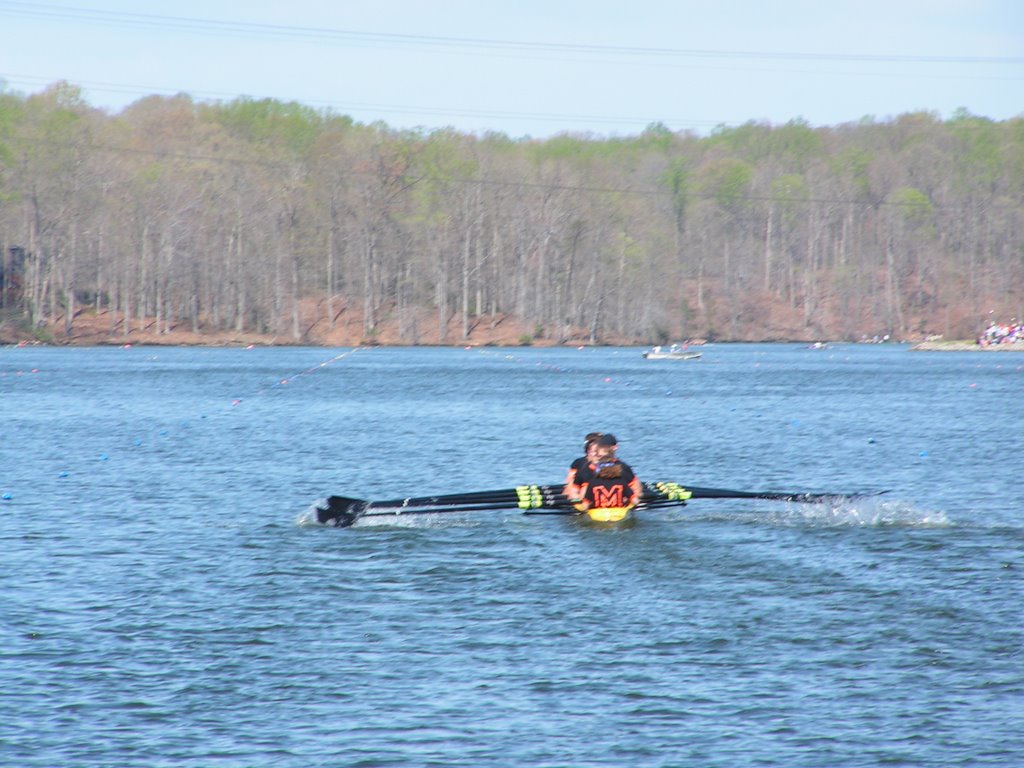
For the second year in a row the rowing team from Thomas Jefferson High School in Fairfax County was among the best crew teams in the world, competing at the Henley Royal Regatta in England. We would like to think that one of the factors assisting these great athletes has been one of the best rowing facilities in the country at Sandy Run Regional Park. The Sandy Run facility is on the Occoquan Reservoir and is a facility dedicated to scholastic rowing.

The TJ Men’s Varsity won all their regattas against all the local competition in Virginia. They then beat five top crews from across the Mid-Atlantic States and New England at the St. Andrew’s Invitational regatta. After that regatta, it became clear that TJ’s boat this year would be very good. And, good it proved to be, winning the Virginia State Championships, the world’s largest high school regatta (175 schools), the Stotesbury Cup Regatta in Philadelphia, and the Scholastic Rowing Association of America National Championships.

This record made it clear that the boat would not only qualify, but be offered one of the eight top seeds, for the Princess Elizabeth Challenge Cup at the Henley Royal Regatta, the premier rowing event in the world. As rowing is not school sponsored in Northern Virginia, the parents worked hard to make arrangements and to raise funds to get the team to England for the regatta. After practicing for more than a week in England, rowing practice races against numerous other college and club crews from the US, the competition bracket was determined on Saturday June 30. TJ, while seeded, was placed in the half of the bracket with the Irish, Australian, Canadian, and British champions.

TJ won its first two races “easily” (more than five lengths) against Methodist College, Belfast, the Irish champions, and then Winchester College. In the round of eight, TJ faced the Brentwood College School, the Canadian champions, and lost after battling its opponent for the lead for the first mile. Brentwood ended up second in the regatta losing by one foot to Shrewsbury School of England. The TJ Men’s Varsity Eight ended their amazing season US National Champions and one of top eight high school boats in the world!

Congratulations TJ on an outstanding season!!


(All but the first paragraph of this post was copied from a report to TJ supports from Warren Muir)

Friday, June 29, 2007

Attracting More Park Users & Winning National Recognition


This week I traveled to Boston along with Jim Mayer (NVRPA Vice Chair) and his wife Marjorie to receive an award in the Better Government Competition hosted by the Pioneer Institute. Pioneer is a public policy think-tank dedicated to promoting lean and efficient government.

We won our award primarily because NVRPA has been very effective in the last two years in competing for the public's leisure time, and attracting more visitors to our Regional Parks. This may not sound like a big deal, but there is a national trend away from people spending time outdoors.

Richard Louv's best selling book Last Child in the Woods focused attention on how today's children are not spending time outside engaging with nature, like previous generations have. The National Park Service release a study last year that showed a 26.5% reduction in camping in National Parks over the last 13 years. And the University of Maryland released a study recently showing a 50% drop in the amount of time children are spending in unstructured outdoor activities compared with a few years ago.

This is a significant societal issue, and for NVRPA whose operations are 80% self funded through user fees, it was a serious financial issue as well. We faced serious financial challenges in 2003 and 2004 as a result of lower park visitation, 2005 showed modest improvement, and in 2006 & 2007 we have been growing our user base rapidly.

To do this we needed to approach the delivery of conservation and recreation services in a business like manner, and actively compete for the public's limited leisure time.

With both our two family campgrounds, and our three golf courses we followed a very effective formula:


  1. We invested in facility improvements that the public valued. At our campgrounds we have added rustic cabins, better utility hook ups, and renovated restrooms. At our golf courses we have added a significant amount of new drainage to improve the course conditions, and we have added new tee boxes and made other improvements.

  2. We offered the public a very good value. Our golf membership program offers unlimited play for the avid golfer at a great price. Our campgrounds are nicer than ever and are price at the low end of the market.

  3. We marketed our offerings like never before. We created great new brochures that we put at all the Virginia Visitor Centers, and many other high traffic areas. We did targeted advertising in golf and camping publications.

The results of this formula for success were fantastic. Our campgrounds saw a 13% increase in usage in 2006, and our golf play was up 12% in the same year. Overall all of our park operations saw an increase of over 10% in public usage during a time when all the national studies are showing the trend going in the opposite direction.


It is critically important for ones mental and physical health at any age to get outdoor. It is also critical to a park agency like the Northern Virginia Regional Park Authority to have the public utilizing our parks.


Please visit a park this week, and tell a friend what a wonderful experience you had.


Wednesday, June 06, 2007

Draft Horses at Temple Hall


Temple Hall Regional Park is a historic farm park just outside of Leesburg on Rt. 15. One of the great new attractions at Temple Hall has been the introduction of draft horses that we use to take park patrons on wagon rides. It is a great way to step back in time and have an experience similar to one that you might have had one hundred and fifty years ago.


Temple Hall was built by Temple Mason, one of the nephews of George Mason in 1810. The farm was donated to the Northern Virginia Regional Park Authority by Mrs. Symington to be used as a site for education about our farming past.


This week, 800 Loudoun County fourth graders came to Temple Hall to learn about farming.

The Birth of a New Water Park


On Memorial Day Weekend 2007, NVRPA opened a redesigned and rennovated water park at Upton Hill Regional Park in Arlington VA.

For decades that has been a popular pool, mini-golf, batting cage, and picnic areas at Upton Hill. What users experience now is the result of almost $2 million in rennovations to the pool. It is now much more of a water park. While we kept the popular lap swimming pool, we completely rennovated the tot pool, and added two new water slides, rennovated the main pool area, and added a great new water play area. The end result is a much more exciting and engaging attraction than we have ever had there.

This year's Memorial Day weekend saw almost twice as many park users at the pool than the preceeding Memorial Day weekend!

NVRPA runs five aquatics facilities, including ones at Algonkian Regional Park, Bull Run Regional Park, Pohick Bay Regional Park, and our flagship waterpark at Cameron Run Regional Park.

Monday, December 11, 2006

Bigger Better Brighter - Light show success


This year the light show at Bull Run Regional Park is all new and attracting record crowds. The new show is the only all LED holiday light show in country. These LED lights are brighter than normal bulbs, last much longer and us only one tenth the electricity of the previous show!

It is an amazing experience driving through two and a half miles of light show in the comfort (and heat) of your car. To date, we has seen almost 12,000 families come through the show!
If you would like to see some video of the show you can use the following link to see when Holly Hunter from FOX 5 News reported from the light show: [the link has expired]

At the end of the light show, on Dec. 14th - 17th and Dec 20th - 24th, is the Winter Wonderland Holiday Village. There is an ice skating rink, tree sales, various vendors selling hot chocolate, food, arts and crafts, as well as carnival rides and a stage with local musician. On Saturday December 10th we named Gerry Connolly (Chairman of the Fairfax County Board of Supervisors) as our honorary Mayor of the Holiday Village.

Those interested in visiting the light show may want to consider coming during the week when the crowds are less, and may want to visit WWW.NVRPA.ORG for the $2 off coupon.

Friday, December 08, 2006

Biodiversity in Urban Parks


[Images Above: Club Moss on the top, and Shining Sumac on the bottom]
Some assume that urban landscapes are void of any notable natural features. The truth is quite different. We have recently been conducting natural resource inventories of some of our parks in urban settings, like Arlington Virginia, and have made some interesting findings.

The Shining Sumac bush on the right is tied for the largest specimen of its kind in the state. The Club Moss while not rare state-wide is somewhat rare in our region. Sometimes our parks are amoung the last natural areas left in urban landscapes. As such, they serve as important places for nature to thrive, and important places for people to go and get re-connected to the natural world.

While it is not well known, some of NVRPA's parkland provides habitat for species that are federally listed as threatened or endangers (the two plants pictured above are not in this category). Whether endangered or just rare to our region, protecting our biodiversity is an important part of our mission as a regional park agency.

For those wanting to learn more about local plant species, one of the best places to go is the Potomac Valley Collection at Meadowlark Botanical Gardens in Vienna. This great Regional Park is a wonderful place to get acquainted with a wide variety of native plants, so the next time you are walking through the woods, you will see your surroundings with a whole new appreciation.

Thursday, November 02, 2006

Golf and Nature Education can go Together


Nature Learning Center at Algonkian Golf Course

One of the goals for all of our parks this year is to expand their natural and/or historic interpretation. This comes from our mission that calls on us to “foster an understanding of the relationship between people and their environment.”

This goal is straight forward part of our system like the nature center at Potomac Overlook, Meadowlark Botanical Gardens, or our historic sites like the Carlyle House, Balls Bluff Battlefield, Temple Hall Historic Farm, or Aldie Mill. It is more of a challenge for the parks that have traditionally been more focused on the recreational part of our mission. A good example of how the recreational and educational portions of our mission can be married is the nature learning center in the pro shop at our golf course at Algonkian Regional Park. This display area has a wealth of information on the flora and fauna that golfers will likely see as they play this beautiful course along the Potomac River.

Another way we are building the bridge between our recreational and environmental elements of our mission is our efforts to get all three of our golf courses certified by the Audubon Cooperative Sanctuary Programfor Golf Courses. This program sets high standards for golf courses in the following areas:
· Environmental Planning
· Wildlife and Habitat Management
· Chemical Use Reduction and Safety
· Water Conservation
· Water Quality Management
· Outreach and Education

For more information on this program see: http://www.auduboninternational.org/programs/acss/golf.htm

Friday, October 27, 2006

History comes alive... Or is it dead?

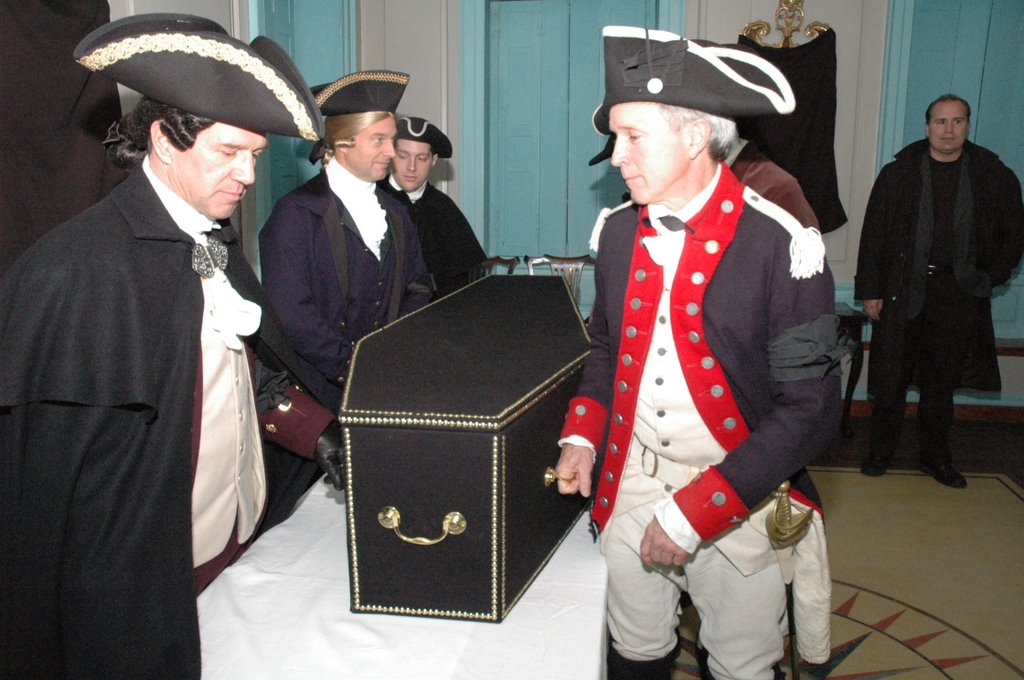
One of our most creative efforts to engage the public in history is our October exhibit on death and mourning practices of the 18th Century held at the Carlyle House in Alexandria. This exhibit focuses on the death of John Carlyle, one of the early civic and business leaders in colonial Alexandria. This seasonal program concludes with a reenactment of John Carlyle's funeral. This year this event takes place on Saturday October 28th from 6:00 - 9:00 P.M.

Innovation in Government

Recently, the Northern Virginia Regional Park Authority (NVRPA) applied for the Harvard School of Government's Innovation in Government Award. It will take some time to find out how we did against the considerable national competition. Whether we win this award or not, clearly we have many innovative initiatives taking place at the Regional Park Authority.

NVRPA operations are roughly 80% self funded. Because so little of our operating revenues come from tax dollars, we have become very entrepreneurial. Close to 30% of our operating revenues come from our two campgrounds and three golf courses.

To improve our services we identified new value added features/services appreciated by our customers. As a consequence, park usage and revenue improved significantly. We created a golf membership program encouraging frequent players to purchase season passes for unlimited play (priced to promote play during non-peak demand times) at NVRPA courses. Augmented by an aggressive marketing program, including ads in golfing publications and local newspapers, wide distribution of a new brochure and use of Virginia Tourism assets, play at all NVRPA golf courses dramatically improved. A 12.78 % increase in golf rounds over the previous year resulted.

Camping is another core service that experienced dramatic usage and financial improvement as a result of enhanced features. At our two campgrounds, we added rustic cabins, expanded hook-ups for recreational vehicles and wireless internet access. These new features allow the public to select from a wider range of camping experiences and comfort levels. The new amenities were marketed through print ads, the internet and camping directories. NVRPA developed and widely distributed captivating literature promoting family camping near the nation’s capital. An increase of 8,997 campers over the previous year and an income increase of $134,975 (18.46% annual increase) were realized. These are examples where innovation is transforming NVRPA, allowing us to respond to the public need for more recreational opportunities at an affordable price. NVRPA is pursuing many other managerial, partnership and technology initiatives, permitting the agency to live into its mission and affect a futuristic plan for obtaining more parkland in Northern Virginia.

Monday, August 21, 2006

Use of W&OD Trail on the Rise

On Agust 18th the Washington Post ran a front page story titles Bicycling on Popular W&OD Trail No Longer a Breeze. This story focused on the increased use of the W&OD trail and several cycling accidents over the last year an a half. Below is a letter to the editor that I sent in response to this article.

Dear Editor of the Washington Post,

Your August 18th article about cycling on the W&OD Trail and other popular trails in our area pointed out how many more trail users there are today than in the past. In the most recent park needs survey in Fairfax County, 54% of households had used walking/biking trails in the last 12 months, and 64% of households expressed a need for such amenities in the future. With interest in trail use on the rise at the same time our population continues to grow in Northern Virginia, it is little wonder that so many trail users are finding their way to the W&OD. This is the premier multi-use recreational trail in our region, stretching 45 miles from Arlington to Purcellville. In many ways the W&OD is the community commons for Northern Virginia. It links our communities, creates opportunities for healthy recreation, and is a unifying thread through a very diverse region. It is great news that so many in our area are making healthy choices to increase their physical activity, spend time outside with family and friends, and seek clean alternatives to our congested roads. Expanding use of the W&OD and other trails in the region argue for more interconnected trails making non-motorized travel easier.

I appreciate the Post highlighting trail rules and etiquette. Following these simple guidelines will enhance the experience of all the users of the trail, from equestrians, walkers, skaters, and cyclists. It is also very important to note that the four accident related fatalities in the trail’s 31 year history were all the result of cyclist riding into cross streets without stopping at posted signs. The Northern Virginia Regional Park Authority has installed stop ahead, and stop signs at every cross street, this fall we will be adding rumble strips and large lettering on the trail surface letting cyclists and other trail users know that they are approaching a cross street and need to stop and pay attention to road traffic. We are also working with the Virginia DOT to improve the safety of these crossings, with better signage, and grade separated crossings or traffic lights wherever feasible.

Even with the inherent risks of crossing streets, the Trail is a very safe place to recreate. I have cycled long stretches of the W&OD with my young daughter on the back of my bike and never felt the trail offered anything less than a family friendly place to recreate with beautiful scenery and interesting lessons in history.

For a complete list of rules and tips for playing it safe along the W&OD trail, I would encourage your readers to visit the Northern Virginia Regional Park Authority website at http://www.nvrpa.org/.

Wednesday, August 16, 2006

Governor focuses on Environmental Challenges


Governor Kaine will be hosting a Natural Resources Leadership Summit this year to tackle some of the most challenging environmental issues of the Commonwealth. The Summit will deal with four issue areas:

  • Land Conservation
  • Outdoor Recreation, Fisheries & Wildlife Resources
  • Water Quality and Water Resources
  • Air Quality


The goals will be to both generate creative ideas for solving these challenges, and building a degree of consensus in the environmental community on what resources are needed to achieve these goals.

In 2003, Governor Warner held a similar Summit that resulted in a high degree of success. In 2003, there also was significant underfunding of state agencies with environmental responsibility like the Department of Environmental Quality (DEQ), the Department of Conservation and Recreation (DCR), the Department of Forestry and others. That issue has improved since 2003. One of the largest challenges today is land conservation.

The Chesapeake Bay 2000 agreement has a number of specific goals that the states of the Bay Region agreed to meet by 2010. One of these goals is to preserve 20% of the land in the Chesapeake Bay watershed. With just three years to go, Virginia has some catching up to do. Governor Kaine has set a goal of conserving 400,000 acres between now and 2010. Achieving this goal will help assure that Virginia meets its Chesapeake Bay agreements.

The best way to advance all of the environmental concerns on the Governor's list is to acquire more parkland next to our streams, rivers and lakes. Forested buffers to bodies of water provide a natural filter for pollutants that would otherwise be washed into our waterways. Parkland next to waterways provides some of the best trail and boating opportunities for the public, as well as connected wildlife habitat. And mature forests are an excellent filter for our air quality.

These are not new ideas. In the 1960s, the Northern Virginia Regional Park Authority acquired over twenty miles of parkland along the north shore of the Bull Run/Occoquan Rivers. This parkland provides fantastic recreational opportunities for boating, hiking, camping and other activities, in addition to being an important natural filter to the Occoquan Reservoir, which is the drinking water source for 1.3 million people. The Regional Park Authority also owns 13 miles of parkland along the Potomac River, which protects our drinking water and provides numerous recreational opportunities.

There are other ways to achieve some of the environmental benefits that we need, but I know of no better solution than expanding public parkland to reach our goals in land conservation, water quality, outdoor recreation and habitat enhancement all at the same time. The challenge will be to find new ways of funding parkland expansion. We have not had a state park bond since 2002. Local park expansion is usually funded with local bonds that need to compete with other public needs like schools, public safety and other local government priorities. Are there other potential revenue sources that could be targeted to meet these goals? How do we best coordinate and prioritize state, regional and local efforts at parkland expansion to get the greatest environmental and recreational impact? Whatever the answer is to these and other questions, it is helpful to have the Governor bring a focus and priority to these issues.

Tuesday, August 01, 2006

New Funds for Park Expansion

The Northern Virginia Regional Park Authority (NVRPA) was awarded a grant from the Virginia General Assembly in the amount of $125,000. The grant will help fund parkland acquisition.

“We are focused on growing the park system in Northern Virginia,” stated NVRPA Chairman Bill Dickinson. “Just this year, we acquired historic Aldie Mill a 19th century gist mill in Loudoun County from the Virginia Outdoor Foundation. Our organization is involved in a number of negotiations regarding land gifts and bargain sales aimed at expanding our land holdings. This grant will help us to expand the 10,000-acre park system that NVRPA operates in Loudoun, Fairfax and Arlington Counties and the Cities of Falls Church, Fairfax and Alexandria.”

”Conserving our important historic sites and natural areas is vitally important to our quality of life,” remarked Delegate Vince Callahan, Chairman of the House Appropriations Committee. “We are fortunate to have a strong regional park system. I was pleased to help appropriate additional funds so the Northern Virginia Regional Park Authority can continue to expand and serve the public,” continued Callahan.

Delegate Joe May, who also serves on the House Appropriations Committee added, “being able to support parks that will be used by millions of area residents over time, is one of the most rewarding parts of serving in the General Assembly. I was happy to help pass this appropriation for the Northern Virginia Regional Park Authority.”

“Conserving land is a team sport. We are very grateful to have the partnership and support of the General Assembly to assist our effort to expand the parkland of our region,” said Paul Gilbert, Executive Director of the Northern Virginia Regional Park Authority.

Monday, May 08, 2006

NVRPA to own Aldie Mill


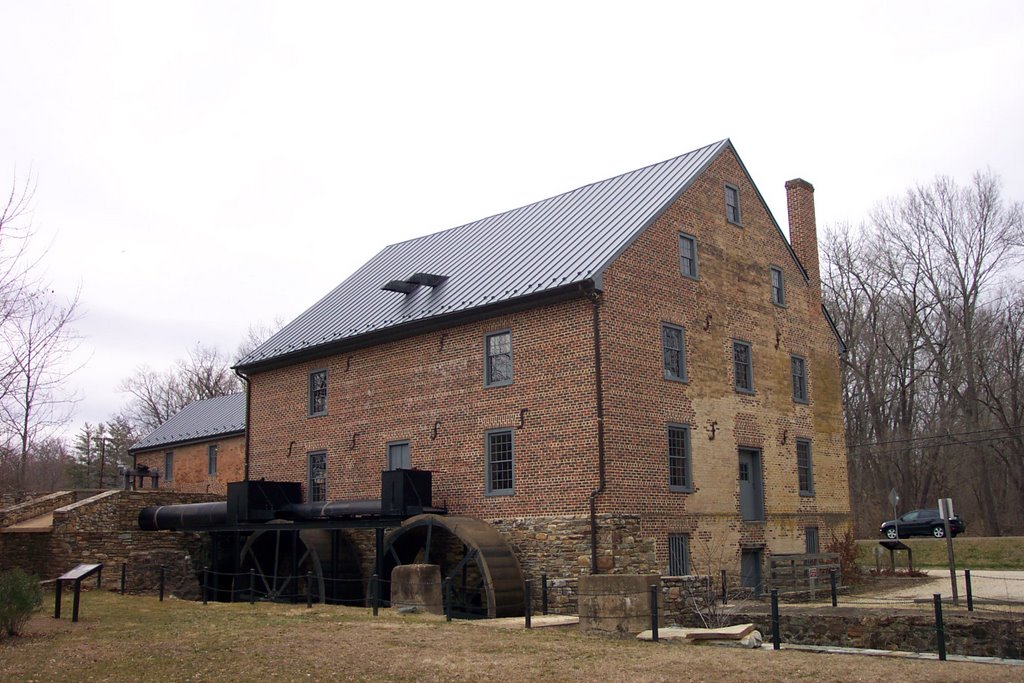
By the end of June, the Northern Virginia Regional Park Authority will be the new owners of the Aldie Mill, a 19th Century grist mill in western Loudoun County off of Rt. 50.

The mill was build in 1807-9. During the Civil War Aldie was known as a center for Confederate partisan ranger Col. John Singleton Mosby. At one point Mosby and his rangers captured two Union soldiers who had tried to hid in the flour bins of the Mill. Mosby wrote, "when we pulled them out there was nothing blue about them."

The famous writer Herman Melville wrote a poem about a scouting party that he went on to look for Mosby's Rangers in the Aldie area. Below are a few lines from this poem.

The Scout toward Aldie by Herman Melville

"They lived as in the Eerie Land-- The fire-flies showed with fairy gleam; And yet from pine-tops one might ken The Capitol dome--hazy--sublime-- A vision breaking on a dream: So strange it was that Mosby's men Should dare to prowl where the Dome was seen...

Rumor had come that a band was lodged In green retreats of hills that peer By Aldie (famed for the swordless charge). Much store they'd heaped of captured arms And, per adventure, pilfered cheer; For Mosby's lads oft hearts enlarge In revelry by some gorge's marge..."

The full text of this poem can be found on the following web site
http://www.civilwar.org/historyclassroom/hc_mosbypoem.htm

Aldie Mill has been owned and operated by the Virginia Outdoor Foundation (VOF) since 1981. Under VOF's stewardship, the merchant mill was fully restored.

Thursday, May 04, 2006

OK for a Rookie


Last week I spent a day with one of our maintenance crews mowing a section of the W&OD Trail. It was a great experience, and one that I look forward to doing again. Everyone on that crew was a hard worker who took pride in their work. Often throughout the day the public would come up to a member of the crew and ask questions about the trail. I was impressed with how kind, helpful and knowledgeable everyone was in dealing with the public.

According to Larry Hunter, Maintenance Supervisor for the W&OD Trail, I did “OK for a rookie.” I only got the mower stuck once, and only ran into a transmission tower that jumped out in front of me once. (Good news: the two ton block of concrete that formed the base of the transmission tower was not damaged by my mower.)

With several million visitors per year, the W&OD Trail is almost always in use by thousands of people biking, walking, jogging and in-line skating. In many of the more urban areas the 100 foot wide trail property is a significant part of the community’s public green space, and is used in areas for picnicking, memorials, gardening, and many other uses not directly related to the 45 mile long trail that is the heart of the Washington and Old Dominion Regional Railroad Park (AKA W&OD Trail).

Wednesday, May 03, 2006

Volunteers make Great Contributions


(Image: Joe Soles in front of Pohick Bay Pool Building. Joe and his wife Linda recently volunteered their time and skills to landscaped this and other areas of Pohick Bay Regional Park.)

Like many park agencies, the Northern Virginia Regional Park Authority is only able to serve the public the way we do through the dedication, passion and work of many volunteers. If we did not have all of our volunteers that care so much for the parks, we would need to almost double our staff.

Our volunteers play many important roles in our parks, some volunteer to lead historic tours of the Carlyle House or Balls Bluff Battlefield, some donate their time to patrolling the W&OD trail, or to helping maintain and run our three golf courses, and others like Joe and Linda Soles see a need in one of our parks and volunteer their time and talents to address that need.

I know many agencies benefit from the good works of volunteers, but I think the Regional Park Authority is more fortunate than most in having a strong, dedicated and talented group of volunteers in all of our parks that make great contributions to the quality of our parks.

To all of those to donate their time to the public good, please know your work is highly valued and appreciated!!

Tuesday, May 02, 2006

Governor Kaine sets aggressive land conservation goal

Governor Tim Kaine recently made a remarkably progressive speech on the environment. In this speech Governor Kaine sets a goal of conserving 400,000 acres of open space by the end of the decade, and pledges the resources to achieve this and other goals. Below are some sections from this address made on April 20, 2006.

"It was a century ago, at the 300th Anniversary of the Jamestown landing, that President Theodore Roosevelt articulated the approach we must take to managing our natural resources. On June 10, 1907, standing in Jamestown, President Roosevelt, America’s patron saint of conservation, said, “In utilizing and conserving the natural resources of the nation, the one characteristic more essential than any other is foresight.”
As we partner to preserve Virginia’s outdoors, there is no way to overstate the importance of foresight. Virginia is currently home to 7.5 million people. Between now and the end of my term in 2010, our population will grow 5%. It will increase by nearly 15% by the year 2020 and nearly 24% by the year 2030. By then, Virginia’s population will be 9.3 million people.
That increase in population is a driving force in Virginia’s rapid development. Of all the development that has occurred in the last 400 years, more than a quarter of it has taken place in the last 15 years. Being good stewards requires us to have the foresight to make responsible decisions today and take actions – actions which may not be available to future governors and future generations – to ensure that we preserve the natural, cultural and historic resources that serve as the foundations of Virginia’s identity.
Land
Virginia’s identity is its land. From the shores of Chincoteague to the hills and valleys of Cumberland Gap, Virginia’s beauty is unmatched. But as quickly as our population is growing, our rate of development is growing even faster. If we continue as we have, Virginia will develop more land in the next 40 years than we have in the last 400 years. Without foresight, without a plan to focus and manage that growth in a balanced way, we will be failing ourselves and future generations.
As we partner to protect Virginia’s outdoors, we must put balance at the center of land use decisions. We must create an effective model that encourages redevelopment in cities and suburbs and discourages the wasteful and unnecessary consumption of land farther out from our population centers. And we must reward communities that adopt and use balanced growth policies with economic development assistance and other incentives...

In the Chesapeake 2000 Agreement, Virginia has pledged to permanently protect 20% of the Chesapeake Bay watershed by 2010. The other states that made the same promise – Pennsylvania and Maryland – have already met that goal. Virginia still has 358,000 acres to go. Getting there won’t be easy. In the last 5 years, we’ve protected an average of 54,000 acres per year statewide, counting both private and public efforts. We need to protect about 72,000 acres per year, just in the Chesapeake Bay watershed, in order to meet the goal.
It will be the goal of my administration to meet that obligation and surpass it. Since 1968, Virginia has preserved 330,000 acres of land. Most of that has been preserved in the past five years. The goal of my administration is for the state to preserve an additional 400,000 acres by the end of the decade.
To accomplish that, we rely heavily upon the open-space protection tools that have served Virginia well: Our land preservation tax credit and the Virginia Land Conservation Foundation.
Virginia’s land preservation tax credit is among the most effective open-space protection tools in the nation. And I will protect it from political and meddlesome limitations. The tax credit is driving an increase in the number of voluntary donations of conservation easements and is a key part of meeting our Chesapeake Bay Agreement obligations.
Meeting those obligations and protecting open space throughout the rest of Virginia requires significant, reliable state investments in land conservation. In addition to protecting the tax credit, I pledge to provide more funding for the Virginia Land Conservation Foundation and local “Purchase of Development Rights” programs than any governor before me. I believe that investment can be made by making open space preservation a priority in Virginia’s General Fund.
The result will be more conservation easements; more public lands, such as state parks; wildlife management areas, state forests and natural-area preserves, protecting opportunities to hunt and fish, and greater local preservation efforts that will help family farmers stay on their land instead of selling out to development.
With every passing day, land is becoming more expensive and scarcer. I will set and meet this preservation goal during my term – not just because it’s the right thing to do – I will do it because if I don’t, the opportunity to do it will not be there for future governors and future Virginians...

Three years ago, Governor Warner held Virginia’s first Natural Resources Leadership Summit, bringing together perspectives from all throughout Virginia to address solutions to critical issues facing Virginia’s outdoors.
The Warner administration made significant progress in two of the highest priorities identified at that summit: land and water.
It is time to convene another summit. It’s time to reassess what has worked and what hasn’t, what changes and new initiatives need to be made, and to be frank with ourselves. There is great value in a regular reassessment of our efforts to protect Virginia’s outdoors.
I will convene the Virginia Outdoors Summit in 2006. There, we will discuss ways to protect Virginia’s outdoors, conserve land, enhance water quality, and provide access to clean water for all Virginians.
“The conservation of our natural resources and their proper use constitute the fundamental problem which underlies almost every other problem of our national life.” Those too are the words of President Theodore Roosevelt 100 years ago in Jamestown, Virginia.
The generations since have seen time and again just how right he was – and how right he was to call for foresight and conservation when it comes to using our natural resources. The need for those qualities is even greater now than they were a century ago.
Now is time to heed those words.
Now is time to be good stewards, to work together in partnership to protect Virginia’s outdoors. Now is time to fulfill our obligation to our children’s children.
Thank you."

Full text of this speach is available at:
http://www.governor.virginia.gov/MediaRelations
/Speeches/2006/EnviroSymposium.cfm

Tuesday, April 25, 2006

Customer Service is Job #1


Everyone that work in parks is in the customer service business. To hone our skills in this area, the Regional Park Authority brought in a national expert in customer service and supervisory skills to do a one day training with our staff and park employees from many of our member jurisdictions. Ruby Newell-Legner has done training with over 300 park organizations nationally and many public and private clients world wide. Below is just a small sample of the materials she shared with us.

RUBY NEWELL-LEGNER, CSP
9148 W.Vandeventor Dr. 􀂋 Littleton, CO 80128 􀂋 Phone (303) 933-9291 􀂋 Fax (303) 904-2966 􀂋 E-Mail: Ruby@RubySpeaks.com 􀂋 www.RubySpeaks.com
Making Customer Satisfaction EverybodyÂ’s Business

Problem Solving -
Anticipate problems and solve them proactively before they happen
Plan goals around the future - figure out what you donÂ’t know so you can develop your skills
Put out fires in the infant stage
Focus on the "Big Picture" approach to handling problems when your supervisor is unavailable
When there is a crisis - deal with it calmly and demonstrate positive leadership
Bring two possible solutions and a recommendation with every problem or situation
Develop alternative approaches to problems and pinpoint solutions that appeal to everyone
Organization -
Work smarter not harder - set priorities - plan your day and live it - stay focused
Become a “Power Planner” and improve productivity by spending 10 minutes a day planning
Identify time-wasters and evaluate how to eliminate them
Determine specific routines that smooth out peak and slack periods and help you get more
control over your workday, every day
Control interruptions
Predetermine intermediary deadlines to insure meeting deadlines and demands
Prioritize the workload - even when everything needs to be done right now
Handle multiple projects by prioritizing - Smooth out the workload
Say “yes” only when it is reasonable and realistic
Communication -
Select the best response when others criticize your supervisor or your organization
Become a "buffer" between adversaries without being trapped in the middle
Communicate when you are ready for more responsibility
Present your problem solving ideas in a way that earns credibility and respect
Keep your supervisor informed without being a gossip or a tattle-tale
Relay constructive criticism without it being taken personally
Leave professional impressions throughout the organization
Deal with Office Politics and avoid being caught up in it
Be discrete in sharing information and handling confidential material
Customer Service -
Get to know your customers - Demonstrate an interest in their lives
Take every opportunity to call the customer by name
Acknowledge a customerÂ’s presence by the time they get within two feet
Interrupt any conversation if you are talking to a co-worker so the customer knows that they are
their first priority
Listen and acknowledge that you are listening to the customers
Double check orders for accuracy
If delivery is not going to be when you promised, call the customer immediately to inform them
Assist customers in learning about how a product or service works
Look for the opportunity to add value to each transaction
Manage/Supervise -
Take charge and demonstrate initiative without appearing overbearing and pushy
Identify difficult employees and redirect them with swiftness and ease
Prevent misunderstandings and increase efficiency by giving clear instructions and
having staff repeat back information to make sure that they understand it
This is the form I shared with Lisa
Skills that she
needed to develop
to move to the next
level in her career

Tuesday, March 28, 2006

Fostering Creativity and Team Work

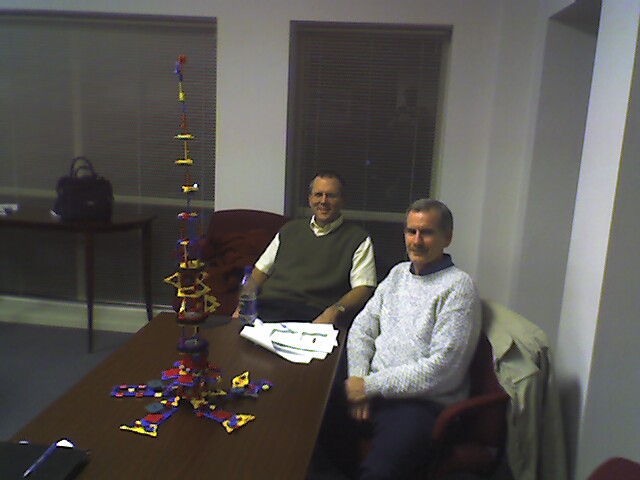
[Todd Hafner, and Paul McCray using their creativity during one of the Seminars]

Over the last six months I have been going through a UVA seminar series on leadership skills with some of the other senior management at the Regional Park Authority. Paul McCray, Director of Operation, Todd Hafner, Director of Planning and Development, and Steve Bergstrom, Director of Finance and Budget have all been taking these seminars with me.

The Northern Virginia Regional Park Authority is very unique among park agencies in that we generate 80% of our operating funds through enterprise revenues. This makes us something of a hybrid organization, on one hand, we have a mission to serve the public, providing recreational and educational opportunities, as well as conserving natural and historic resources, and on the other hand we have the practical challenge of generating most of our operating revenue internally.

I find our entrepreneurial nature very exciting. We are challenged to be nimble and creative, and to always look for new opportunities that can help us achieve our mission and bring in the enterprise revenue that has made us one of the least taxpayer dependent park agencies in the nation. Participating in the leadership seminars is just one of the many way we are working to keep our organization creative and entrepreneurial.

The description of this series taught at the Falls Church office of UVA is as follows:
Leadership Seminar Series
Today's business environment remains as competitive as ever and challenges the most effective managers to become exceptional leaders. UVA continues its leadership series and provides managers with skills to navigate the challenges that lay ahead by concentrating on versatile leadership and discovering ways managers become exceptional leaders. By concentrating on versatile leadership techniques, managers will be able to tactically enhance their leadership skills in communicating with diverse audiences, maintaining highly effective teams, identifying and understanding leadership roles, and understanding the importance of shared leadership and team-decision making.Seminar Leader - Dave Minionis has extensive experience in professional and organizational effectiveness. He plays an integral role as a trusted business advisor to many clients to determine their specific needs, adapts training programs, interventions, and change efforts to fit their requirements. His experience in developing leadership competencies, management capabilities, and organizational and team effectiveness brings a unique perspective to many organizations. His expert teaching techniques are known for fostering an interactive, engaging, and fun learning environment.
Required Courses:
Becoming a Versatile Leader
Leadership and Influence
Leading Change
Persuasively Presenting Your Ideas
Trail Blazing with Teams
Inspiring Creativity