[The following come directly from the Washington Post, 11/29/07]
Park Authority Looks to Maintain High Ratings
5-Year Strategic Plan Takes Its Lead From Survey of N.Va. Residents
By Kirstin DowneyWashington Post Staff WriterThursday, November 29, 2007; VA03
Northern Virginians love their parks, and a five-year strategic plan being proposed by the Northern Virginia Regional Park Authority aims to keep it that way.
In a new survey of area residents, four-fifths rated the quality of their local parks as excellent or good. They like the programs offered by the park agencies even more, with about 90 percent of residents giving the park authority high marks for the wide array of activities at the parks, such as fitness classes, golf lessons, tennis leagues and youth activities.
It's not surprising that residents are pleased. The park authority, the largest regional park agency in the state, encompasses 21 kinds of parks, more than 100 miles of trails and more than 10,000 acres of land.
Its sites include a water-powered grist mill in Aldie, an aquatics play complex at Algonkian Regional Park in Sterling, a Civil War battlefield at Ball's Bluff, a boating marina in Lorton, a wave park at Alexandria's Cameron Run Regional Park, a golf course in Ashburn and even a cornfield maze in Leesburg.
But many challenges lie ahead for park officials in an area with more than 1.6 million residents, many with widely varied ideas of what makes a day in the park fun and worthwhile. The debate over dog parks vs. playgrounds is just one illustration of the ways opinions can vary. Finite resources, however, require that the park authority make choices about what to do next.
For that reason, the park authority commissioned an evaluation of park programs by local elected officials and park enthusiasts. It surveyed 2,500 residents and got full responses from 900 of them.
"The creation of a plan like this is almost as important as the end product, since through the process, people are challenged to think beyond the needs of today and envision what could be in the future," said Paul Gilbert, the agency's executive director.
First: What do people like best? The authority found that paved walking and biking trails are the most important park feature for residents, with 71 percent declaring them a personal favorite, followed closely by small community parks, which 69 percent singled out. The most popular activities are adult fitness and local history programs.
About 59 percent of respondents said they support purchasing land to preserve open space. Consequently, in the next five years, the park authority intends to buy more land, particularly sites requiring watershed or habitat protection or places with valuable historic resources. It also will expand facilities in places it owns that include those features. Specifically, under the plan, the park authority seeks to buy three such properties within five years and add five trail segments to the hiking and biking system.
The park group also plans to increase its interaction with schools by creating interpretative activities tied to the Virginia Standards of Learning requirements, helping to boost student achievement. The authority plans to establish five SOL-based programs at parks within five years.
The agency also intends to put in place new administrative and accounting procedures to improve efficiency.
A public hearing on the plan will be at 6:30 p.m. on Dec. 20 at park authority headquarters at 5400 Ox Road in Fairfax Station. A debate over which projects get priority might be in the offing, because of the many differences of opinion among park-goers.
About 80 percent of Fairfax County residents said they had visited a park within the past year; 66 percent of Alexandria residents said they had. Fairfax City residents were happiest with the programs they were offered; half of those residents called the programs "excellent."
About 30 percent of Loudoun County residents said they felt they needed campgrounds, compared with 14 percent of Falls Church residents. Similarly, youth-oriented programs were more popular in Loudoun County than in Falls Church.
Thursday, November 29, 2007


Tuesday, October 30, 2007
"Cool" Park Authority
 The author with electic utility vehicles now used at 5 parks
The Northern Virginia Regional Park Authority is the first park authority in the nation to agree to voluntarily reduce our greenhouse gas emissions through the Cool Counties Initiative. Cities and Counties across the nation are taking steps to reduce the causes of global warming. In Northern Virginia all ready the City of Alexandria, Fairfax and Arlington Counties have made this commitment.
To bring attention to this critical issue, NVRPA hosted a free outdoor showing of the movie An Inconvenient Truth about global climate change. Prior to the showing of the movie on October 28th the crowd heard from Fairfax County Supervisor Cathy Hudgins, Arlington Board Chair Paul Ferguson and Falls Church City Councilman David Snyder about local effort to reduce carbon emissions.
NVRPA began its energy conservation effort a little over a year ago. These efforts have resulted in a total carbon emission drop between 2006 and 2007 agency wide. Efforts at Brambleton Regional Golf Course for example, saved enough energy last year to heat and cool 103 average homes for a year, a 27 percent reduction in the course’s energy consumption. Last month’s adoption of the Cool Counties Initiative by the NVRPA Board of Directors was an important step for the Park Authority, according to NVRPA Chairman Bill Dickinson.
“We shall lead by example in the field of energy conservation. By adopting this resolution, we will help create a more sustainable society that is less dependent on non-renewable resources, and achieve long-term cost savings in the process.”
“The Northern Virginia Regional Park Authority has shown real leadership in signing on to the Cool Counties initiative. Their efforts to reduce greenhouse gas are a direct help to the Arlington Initative to Reduce Emissions (AIRE). I am thrilled NVRPA is offering a free showing of An Inconvenient Truth. The more people that see this important movie the better our chances are to correct global warming. I would encourage everyone to attend this event,” remarked Arlington County Board Chairman Paul Ferguson.
NVRPA Board of Directors member Judy Braus (Fairfax County), who also serves as Vice President, Education and Centers, National Audubon Society added that programs like the one being held at Meadowlark were key in terms of raising public awareness.
“The local governments like Fairfax County, Arlington County and the City of Alexandria that have taken formal action to reduce their emissions and help citizens understand what they can do to reduce pollution are making an enormous difference,” Braus noted. “Global warming is one of the most critical issues facing our world. Understanding the issue and some of the steps we can all take to reduce our emissions is the first step to solving this issue. That is why coming to the event at Meadowlark is so important.”
Fairfax County was instrumental in working with other Counties to develop the Cool Counties initative. On hearing the news of NVRPA’s adoption of the Cool Counties Resolution Fairfax County Chairman Gerry Connolly remarked, “I applaud the Northern Virginia Regional Park Authority’s adoption of Cool Counties. Because of their large land holdings, substantial fleet, and numerous facilities, the NVRPA has the capacity to make a significant contribution to the effort to stabilize and reduce greenhouse gas emissions.
Thursday, September 06, 2007
Heroes Save a Young Life

On September 4, 2007 the Alexandria Fire & Rescue Department gave awards to a life guard and pool manager from Cameron Run Regional Park for their role in saving the life of a seven year old girl. The two heroes were, Colin Veditz the life guard that identified that the girl was in trouble and Amanda Lindsay who was the pool manager that assisted with the first aid.
The event happened in June when a young girl lost consciousness in a shallow pool, due to a medical condition. Colin and Amanda acted quickly, pulling her from the pool and brining her back to consciousness before the EMTs arrived. The City Fire and Rescue officials remarked that Amanda and Colin’s good training and quick response made their jobs easy and probably save the life of this girl.
NVRPA life guards and pool managers receive considerably more training than most life guard, and are regularly audited for safety related indicators like scan times, equipment readiness, and professionalism. The National Aquatic Safety Company (NASCO) ranked all of NVRPA’s five water parks as “World Class” after its most recent audit.
No job is more important than saving lives. We were honored to have heroes like Amanda and Colin, and all the other skilled aquatic safety staff that helped keeps our patrons safe.
Amanda Linsay has worked summer for NVRPA since 2002. She holds Bachelors and Masters Degrees from James Madison University in Education and is a special education teacher for the Fairfax County School System.
Colin Veditz was a first time life guard this year, and said it was the best job he has ever had. He is a rising sophomore at West Virginia University in the field of Management Information Systems.
The event happened in June when a young girl lost consciousness in a shallow pool, due to a medical condition. Colin and Amanda acted quickly, pulling her from the pool and brining her back to consciousness before the EMTs arrived. The City Fire and Rescue officials remarked that Amanda and Colin’s good training and quick response made their jobs easy and probably save the life of this girl.
NVRPA life guards and pool managers receive considerably more training than most life guard, and are regularly audited for safety related indicators like scan times, equipment readiness, and professionalism. The National Aquatic Safety Company (NASCO) ranked all of NVRPA’s five water parks as “World Class” after its most recent audit.
No job is more important than saving lives. We were honored to have heroes like Amanda and Colin, and all the other skilled aquatic safety staff that helped keeps our patrons safe.
Amanda Linsay has worked summer for NVRPA since 2002. She holds Bachelors and Masters Degrees from James Madison University in Education and is a special education teacher for the Fairfax County School System.
Colin Veditz was a first time life guard this year, and said it was the best job he has ever had. He is a rising sophomore at West Virginia University in the field of Management Information Systems.
DC Reflections on Pohick Bay

On the DC Reflections blog there is a great post about kayaking at Pohick Bay and the Great Blue Heron, Bald Eagles, and Red Winged Blackbirds he encounter on a short but memorable paddle in the Pohick Bay Marsh. I find a paddle in the Marsh at Pohick Bay for an hour or two is one of the most relaxing thinks I can do. In a very short time you reconnect with nature. I encourage you to read this post that so well conveys the experience of paddling in this area.
Friday, August 10, 2007
Lafayette Comes to Temple Hall Farm
 Photo (left to right: Marquis de Lafayette, James Monroe, John Quincy Adams & Elizabeth Mason)
August 9, 1825 hero of the Revolution, Marquis de Lafayette, former President James Monroe and current President John Quincy Adams visited Temple Hall Farm as part of Lafayette's 13 month tour of the United States.
August 9, 2007 Temple Hall Farm Regional Park celebrates its first annual Lafayette Day. This event features living history re-enactors, a historic french carriage was provided for the day by Ayrshire Farm, wagon rides and historic house tours were also available. We acknowledged the donation last month of a gift from the Symington Estate to support the farm endowment. Since 2004 the Symington Estate has donated $5 million for the long term support and development of Temple Hall Farm.
This was a great start to an annual event that we hope will grow each year. The long term vision for Temple Hall Farm Regional Park is to greatly expand the interpretation of our agricultural history over the coming years. Lafayette Day gives us one annual special event were we focus on the most exciting day in Temple Hall's almost 200 year history.
For more information on the history of Temple Hall Farm you can see the application for the National Register of Historic Places for the farm at:
http://www.dhr.virginia.gov/registers/Counties/Loudoun/053-0303_TempleHall_2006_NRdraft.pdf
Monday, August 06, 2007
Making History Come Alive!


“Living history,” “re-enacting,” “period costumed performers,” whatever you call it, it is perhaps the most powerful tool to engage the public in historic sites. At the Regional Park Authority we have been working to expand the number and diversity of living history events in our parks to help engage the public in the rich history of our area.
Last Sunday, Carlyle House Historic Park in Alexandria hosted one of its annual re-enactments, focusing on when the Carlyle family moved into the house in 1753. Because of the great living history volunteers that made the house come alive with 18th Century activity, over 400 visitors participated in the afternoon tours! It was a steady stream of public from 12 to 4:00 P.M.
Visitors both learned about history and were treated to an entertaining experience. When people participate in an event like this they come away with a sense of what it was like to live in that time period. This is and experience that it is not easy to get from just reading an interpretive sign or seeing a static display. It is called “living history” for a reason.
The volunteers that do living history are an amazing group. Not only do they give great attention to correct period clothing, they often do extensive research into the character they are portraying. They are a wealth of information, and work hard to make history accessible to the general public. If you see a reenactor at one of our historic parks or one of the other great sites in the our area that do living history programs like, Gunston Hall, Gadsby’s Tavern, Mt. Vernon, or others, ask that person some questions. It will likely lead to a great conversation, that will be both fun and enlightening.
In addition to the programs at the Carlyle House, NVRPA also offers battlefield tours by living history volunteers of Balls Bluff Battlefield in Leesburg. Those tours are held on Saturdays and Sundays at 10:00 and Noon during the spring, summer and fall. Similarly we host milling demonstrations at Aldie Mill Historic Park in Aldie Virginia on weekends at 1:00, 2:00 and 3:00 during the spring, summer and fall.
This year we are adding a new program that we hope to do every August 9th. From 6:00 – 8:00 P.M. on Thursday August 9th we are hosting our first Lafayette Day, at Temple Hall Farm Regional Park outside of Leesburg. This event will celebrate August 9th 1825 when the Marquis de Lafayette, President John Quincy Adams, and former President James Monroe all visited the farm that was owned by William Temple Mason, the nephew of George Mason of Gunston Hall.
Below are some of the Living History Events coming up.
Last Sunday, Carlyle House Historic Park in Alexandria hosted one of its annual re-enactments, focusing on when the Carlyle family moved into the house in 1753. Because of the great living history volunteers that made the house come alive with 18th Century activity, over 400 visitors participated in the afternoon tours! It was a steady stream of public from 12 to 4:00 P.M.
Visitors both learned about history and were treated to an entertaining experience. When people participate in an event like this they come away with a sense of what it was like to live in that time period. This is and experience that it is not easy to get from just reading an interpretive sign or seeing a static display. It is called “living history” for a reason.
The volunteers that do living history are an amazing group. Not only do they give great attention to correct period clothing, they often do extensive research into the character they are portraying. They are a wealth of information, and work hard to make history accessible to the general public. If you see a reenactor at one of our historic parks or one of the other great sites in the our area that do living history programs like, Gunston Hall, Gadsby’s Tavern, Mt. Vernon, or others, ask that person some questions. It will likely lead to a great conversation, that will be both fun and enlightening.
In addition to the programs at the Carlyle House, NVRPA also offers battlefield tours by living history volunteers of Balls Bluff Battlefield in Leesburg. Those tours are held on Saturdays and Sundays at 10:00 and Noon during the spring, summer and fall. Similarly we host milling demonstrations at Aldie Mill Historic Park in Aldie Virginia on weekends at 1:00, 2:00 and 3:00 during the spring, summer and fall.
This year we are adding a new program that we hope to do every August 9th. From 6:00 – 8:00 P.M. on Thursday August 9th we are hosting our first Lafayette Day, at Temple Hall Farm Regional Park outside of Leesburg. This event will celebrate August 9th 1825 when the Marquis de Lafayette, President John Quincy Adams, and former President James Monroe all visited the farm that was owned by William Temple Mason, the nephew of George Mason of Gunston Hall.
Below are some of the Living History Events coming up.
August 9th – Lafayette Day @ Temple Hall Farm
August 18th – Alexandria Surrenders (War of 1812) @ Carlyle House
September 22nd & 23rd - Civil War encampment @ Balls Bluff Battlefield
October 27th – Colonel John Carlyle’s 1780 Funeral @ Carlyle House
November 10th – Muster Day 1781 (join the Fairfax Militia) @ Carlyle House
December 1st – A solder’s Christmas (First VA Regiment) @ Carlyle House
(Check http://www.nvrpa.org/ for more details on these and other programs.)
August 18th – Alexandria Surrenders (War of 1812) @ Carlyle House
September 22nd & 23rd - Civil War encampment @ Balls Bluff Battlefield
October 27th – Colonel John Carlyle’s 1780 Funeral @ Carlyle House
November 10th – Muster Day 1781 (join the Fairfax Militia) @ Carlyle House
December 1st – A solder’s Christmas (First VA Regiment) @ Carlyle House
(Check http://www.nvrpa.org/ for more details on these and other programs.)
Wednesday, July 11, 2007


Above Photos:
Top: Blue Ridge Regional Park
Bottom: Cindy Holcomb & Rhonda Krafchin from REI present me with $5,000 check for the Northern Virginia Regional Park Authority
Recreational Equipment Incorporated (REI) is much more than a great store to get all your outdoor goods, it is an organization that directly contributes to promote conservation and outdoor recreation.
Today REI donated $5,000 to help the Northern Virginia Regional Park Authority develop Blue Ridge Regional Park, near Bluemont Virginia in western Loudoun County. This is a 165 acre property on the top of the Blue Ridge Mountains that we are developing into a youth group camping site. In June our first group of scouts camped out on this beautiful mountain wilderness location. With the donation from REI we will build an amphitheater and start the process of building a trail network on this property.
The site is both beautiful and rustic. If you are looking for running water, electricity and flush toilets, try one of our family campgrounds at Bull Run or Pohick Bay. Blue Ridge Regional Park is for youth groups that want to have a real wilderness experience. It has three camping areas that can each accommodate a group of 20-30. There are fire rings, picnick tables, and porta-potties. We will soon build a shelter using an old stone fire pace from a previous house as the focal point of the shelter. The camp ground is available for organized groups by appointment only. If your group is interested in a great back country camping experience call 703-352-5900.
REI's contributions are not limited to Blue Ridge Regional Park. They have been one of the most consistent contributing organizations for NVRPA for over a decade. In June they organized volunteers to build bridges and blaze areas of trail as part of the Potomac Heritage Nation Scenic Trail, on NVRPA easements and land. Last year they contributed to projects at both Potomac Overlook Regional Park and Bull Run Regional Park, and the list goes on, and on, and on... REI has made conservation a key part of their mission. They understand that people need places to camp, climb, bike, paddle and hike, if there is going to continue to be a market for outdoor gear... An incredibly enlightened perspective.
Today REI donated $5,000 to help the Northern Virginia Regional Park Authority develop Blue Ridge Regional Park, near Bluemont Virginia in western Loudoun County. This is a 165 acre property on the top of the Blue Ridge Mountains that we are developing into a youth group camping site. In June our first group of scouts camped out on this beautiful mountain wilderness location. With the donation from REI we will build an amphitheater and start the process of building a trail network on this property.
The site is both beautiful and rustic. If you are looking for running water, electricity and flush toilets, try one of our family campgrounds at Bull Run or Pohick Bay. Blue Ridge Regional Park is for youth groups that want to have a real wilderness experience. It has three camping areas that can each accommodate a group of 20-30. There are fire rings, picnick tables, and porta-potties. We will soon build a shelter using an old stone fire pace from a previous house as the focal point of the shelter. The camp ground is available for organized groups by appointment only. If your group is interested in a great back country camping experience call 703-352-5900.
REI's contributions are not limited to Blue Ridge Regional Park. They have been one of the most consistent contributing organizations for NVRPA for over a decade. In June they organized volunteers to build bridges and blaze areas of trail as part of the Potomac Heritage Nation Scenic Trail, on NVRPA easements and land. Last year they contributed to projects at both Potomac Overlook Regional Park and Bull Run Regional Park, and the list goes on, and on, and on... REI has made conservation a key part of their mission. They understand that people need places to camp, climb, bike, paddle and hike, if there is going to continue to be a market for outdoor gear... An incredibly enlightened perspective.
Monday, July 09, 2007
Largest Trees in Great Falls

On the 4th of July, the Northern Virginia Regional Park Authority received recognition for having some of the largest trees in Great Falls Virginia.
The Great Falls Citizens Association conducted an extensive heritage tree census this year. One of the goals of the Citizens Association was to highlight the great resource they have in large mature trees, and hope that this effort helps to save these great trees.
The Northern Virginia Regional Park Authority owns over 700 acres in Great Falls. This land is along the Potomac River. Today it is a key part of the Potomac Heritage Scenic Trail system. In the late 18th Century this area was part of the Patowmack Canal system that George Washington built. The Patowmack Canal system was built many years before the C&O Canal on the Maryland side.
Because this area along the river has been largely natural for so many years, it is home to a very mature forest. The largest tree in Great Falls, a Sycamore is on Regional Park Authority land. We also had the largest Hickory, and White Ash. In addition we have among the largest American Beech, Chestnut Oak and Silver Maple.
The Great Falls Citizens Association is a great organization, and I hope their effort to highlight the importance of our mature trees help to protect them. Many of these large trees have been growing for hundreds of years. These giants should be protected like other historic assets.
Thomas Jefferson H.S. Competes at Henley

For the second year in a row the rowing team from Thomas Jefferson High School in Fairfax County was among the best crew teams in the world, competing at the Henley Royal Regatta in England. We would like to think that one of the factors assisting these great athletes has been one of the best rowing facilities in the country at Sandy Run Regional Park. The Sandy Run facility is on the Occoquan Reservoir and is a facility dedicated to scholastic rowing.
The TJ Men’s Varsity won all their regattas against all the local competition in Virginia. They then beat five top crews from across the Mid-Atlantic States and New England at the St. Andrew’s Invitational regatta. After that regatta, it became clear that TJ’s boat this year would be very good. And, good it proved to be, winning the Virginia State Championships, the world’s largest high school regatta (175 schools), the Stotesbury Cup Regatta in Philadelphia, and the Scholastic Rowing Association of America National Championships.
This record made it clear that the boat would not only qualify, but be offered one of the eight top seeds, for the Princess Elizabeth Challenge Cup at the Henley Royal Regatta, the premier rowing event in the world. As rowing is not school sponsored in Northern Virginia, the parents worked hard to make arrangements and to raise funds to get the team to England for the regatta. After practicing for more than a week in England, rowing practice races against numerous other college and club crews from the US, the competition bracket was determined on Saturday June 30. TJ, while seeded, was placed in the half of the bracket with the Irish, Australian, Canadian, and British champions.
TJ won its first two races “easily” (more than five lengths) against Methodist College, Belfast, the Irish champions, and then Winchester College. In the round of eight, TJ faced the Brentwood College School, the Canadian champions, and lost after battling its opponent for the lead for the first mile. Brentwood ended up second in the regatta losing by one foot to Shrewsbury School of England. The TJ Men’s Varsity Eight ended their amazing season US National Champions and one of top eight high school boats in the world!
Congratulations TJ on an outstanding season!!
The TJ Men’s Varsity won all their regattas against all the local competition in Virginia. They then beat five top crews from across the Mid-Atlantic States and New England at the St. Andrew’s Invitational regatta. After that regatta, it became clear that TJ’s boat this year would be very good. And, good it proved to be, winning the Virginia State Championships, the world’s largest high school regatta (175 schools), the Stotesbury Cup Regatta in Philadelphia, and the Scholastic Rowing Association of America National Championships.
This record made it clear that the boat would not only qualify, but be offered one of the eight top seeds, for the Princess Elizabeth Challenge Cup at the Henley Royal Regatta, the premier rowing event in the world. As rowing is not school sponsored in Northern Virginia, the parents worked hard to make arrangements and to raise funds to get the team to England for the regatta. After practicing for more than a week in England, rowing practice races against numerous other college and club crews from the US, the competition bracket was determined on Saturday June 30. TJ, while seeded, was placed in the half of the bracket with the Irish, Australian, Canadian, and British champions.
TJ won its first two races “easily” (more than five lengths) against Methodist College, Belfast, the Irish champions, and then Winchester College. In the round of eight, TJ faced the Brentwood College School, the Canadian champions, and lost after battling its opponent for the lead for the first mile. Brentwood ended up second in the regatta losing by one foot to Shrewsbury School of England. The TJ Men’s Varsity Eight ended their amazing season US National Champions and one of top eight high school boats in the world!
Congratulations TJ on an outstanding season!!
(All but the first paragraph of this post was copied from a report to TJ supports from Warren Muir)
Friday, June 29, 2007
Attracting More Park Users & Winning National Recognition

This week I traveled to Boston along with Jim Mayer (NVRPA Vice Chair) and his wife Marjorie to receive an award in the Better Government Competition hosted by the Pioneer Institute. Pioneer is a public policy think-tank dedicated to promoting lean and efficient government.
We won our award primarily because NVRPA has been very effective in the last two years in competing for the public's leisure time, and attracting more visitors to our Regional Parks. This may not sound like a big deal, but there is a national trend away from people spending time outdoors.
Richard Louv's best selling book Last Child in the Woods focused attention on how today's children are not spending time outside engaging with nature, like previous generations have. The National Park Service release a study last year that showed a 26.5% reduction in camping in National Parks over the last 13 years. And the University of Maryland released a study recently showing a 50% drop in the amount of time children are spending in unstructured outdoor activities compared with a few years ago.
This is a significant societal issue, and for NVRPA whose operations are 80% self funded through user fees, it was a serious financial issue as well. We faced serious financial challenges in 2003 and 2004 as a result of lower park visitation, 2005 showed modest improvement, and in 2006 & 2007 we have been growing our user base rapidly.
To do this we needed to approach the delivery of conservation and recreation services in a business like manner, and actively compete for the public's limited leisure time.
With both our two family campgrounds, and our three golf courses we followed a very effective formula:
We won our award primarily because NVRPA has been very effective in the last two years in competing for the public's leisure time, and attracting more visitors to our Regional Parks. This may not sound like a big deal, but there is a national trend away from people spending time outdoors.
Richard Louv's best selling book Last Child in the Woods focused attention on how today's children are not spending time outside engaging with nature, like previous generations have. The National Park Service release a study last year that showed a 26.5% reduction in camping in National Parks over the last 13 years. And the University of Maryland released a study recently showing a 50% drop in the amount of time children are spending in unstructured outdoor activities compared with a few years ago.
This is a significant societal issue, and for NVRPA whose operations are 80% self funded through user fees, it was a serious financial issue as well. We faced serious financial challenges in 2003 and 2004 as a result of lower park visitation, 2005 showed modest improvement, and in 2006 & 2007 we have been growing our user base rapidly.
To do this we needed to approach the delivery of conservation and recreation services in a business like manner, and actively compete for the public's limited leisure time.
With both our two family campgrounds, and our three golf courses we followed a very effective formula:
- We invested in facility improvements that the public valued. At our campgrounds we have added rustic cabins, better utility hook ups, and renovated restrooms. At our golf courses we have added a significant amount of new drainage to improve the course conditions, and we have added new tee boxes and made other improvements.
- We offered the public a very good value. Our golf membership program offers unlimited play for the avid golfer at a great price. Our campgrounds are nicer than ever and are price at the low end of the market.
- We marketed our offerings like never before. We created great new brochures that we put at all the Virginia Visitor Centers, and many other high traffic areas. We did targeted advertising in golf and camping publications.
The results of this formula for success were fantastic. Our campgrounds saw a 13% increase in usage in 2006, and our golf play was up 12% in the same year. Overall all of our park operations saw an increase of over 10% in public usage during a time when all the national studies are showing the trend going in the opposite direction.
It is critically important for ones mental and physical health at any age to get outdoor. It is also critical to a park agency like the Northern Virginia Regional Park Authority to have the public utilizing our parks.
Please visit a park this week, and tell a friend what a wonderful experience you had.
Wednesday, June 06, 2007
Draft Horses at Temple Hall

Temple Hall Regional Park is a historic farm park just outside of Leesburg on Rt. 15. One of the great new attractions at Temple Hall has been the introduction of draft horses that we use to take park patrons on wagon rides. It is a great way to step back in time and have an experience similar to one that you might have had one hundred and fifty years ago.
Temple Hall was built by Temple Mason, one of the nephews of George Mason in 1810. The farm was donated to the Northern Virginia Regional Park Authority by Mrs. Symington to be used as a site for education about our farming past.
This week, 800 Loudoun County fourth graders came to Temple Hall to learn about farming.
The Birth of a New Water Park

On Memorial Day Weekend 2007, NVRPA opened a redesigned and rennovated water park at Upton Hill Regional Park in Arlington VA.
For decades that has been a popular pool, mini-golf, batting cage, and picnic areas at Upton Hill. What users experience now is the result of almost $2 million in rennovations to the pool. It is now much more of a water park. While we kept the popular lap swimming pool, we completely rennovated the tot pool, and added two new water slides, rennovated the main pool area, and added a great new water play area. The end result is a much more exciting and engaging attraction than we have ever had there.
This year's Memorial Day weekend saw almost twice as many park users at the pool than the preceeding Memorial Day weekend!
NVRPA runs five aquatics facilities, including ones at Algonkian Regional Park, Bull Run Regional Park, Pohick Bay Regional Park, and our flagship waterpark at Cameron Run Regional Park.
For decades that has been a popular pool, mini-golf, batting cage, and picnic areas at Upton Hill. What users experience now is the result of almost $2 million in rennovations to the pool. It is now much more of a water park. While we kept the popular lap swimming pool, we completely rennovated the tot pool, and added two new water slides, rennovated the main pool area, and added a great new water play area. The end result is a much more exciting and engaging attraction than we have ever had there.
This year's Memorial Day weekend saw almost twice as many park users at the pool than the preceeding Memorial Day weekend!
NVRPA runs five aquatics facilities, including ones at Algonkian Regional Park, Bull Run Regional Park, Pohick Bay Regional Park, and our flagship waterpark at Cameron Run Regional Park.
Monday, December 11, 2006
Bigger Better Brighter - Light show success

This year the light show at Bull Run Regional Park is all new and attracting record crowds. The new show is the only all LED holiday light show in country. These LED lights are brighter than normal bulbs, last much longer and us only one tenth the electricity of the previous show!
It is an amazing experience driving through two and a half miles of light show in the comfort (and heat) of your car. To date, we has seen almost 12,000 families come through the show!
If you would like to see some video of the show you can use the following link to see when Holly Hunter from FOX 5 News reported from the light show: [the link has expired]
At the end of the light show, on Dec. 14th - 17th and Dec 20th - 24th, is the Winter Wonderland Holiday Village. There is an ice skating rink, tree sales, various vendors selling hot chocolate, food, arts and crafts, as well as carnival rides and a stage with local musician. On Saturday December 10th we named Gerry Connolly (Chairman of the Fairfax County Board of Supervisors) as our honorary Mayor of the Holiday Village.
Those interested in visiting the light show may want to consider coming during the week when the crowds are less, and may want to visit WWW.NVRPA.ORG for the $2 off coupon.
Friday, December 08, 2006
Biodiversity in Urban Parks
.jpg)

[Images Above: Club Moss on the top, and Shining Sumac on the bottom]
Some assume that urban landscapes are void of any notable natural features. The truth is quite different. We have recently been conducting natural resource inventories of some of our parks in urban settings, like Arlington Virginia, and have made some interesting findings.The Shining Sumac bush on the right is tied for the largest specimen of its kind in the state. The Club Moss while not rare state-wide is somewhat rare in our region. Sometimes our parks are amoung the last natural areas left in urban landscapes. As such, they serve as important places for nature to thrive, and important places for people to go and get re-connected to the natural world.
While it is not well known, some of NVRPA's parkland provides habitat for species that are federally listed as threatened or endangers (the two plants pictured above are not in this category). Whether endangered or just rare to our region, protecting our biodiversity is an important part of our mission as a regional park agency.
For those wanting to learn more about local plant species, one of the best places to go is the Potomac Valley Collection at Meadowlark Botanical Gardens in Vienna. This great Regional Park is a wonderful place to get acquainted with a wide variety of native plants, so the next time you are walking through the woods, you will see your surroundings with a whole new appreciation.
Thursday, November 02, 2006
Golf and Nature Education can go Together

Nature Learning Center at Algonkian Golf Course
One of the goals for all of our parks this year is to expand their natural and/or historic interpretation. This comes from our mission that calls on us to “foster an understanding of the relationship between people and their environment.”
This goal is straight forward part of our system like the nature center at Potomac Overlook, Meadowlark Botanical Gardens, or our historic sites like the Carlyle House, Balls Bluff Battlefield, Temple Hall Historic Farm, or Aldie Mill. It is more of a challenge for the parks that have traditionally been more focused on the recreational part of our mission. A good example of how the recreational and educational portions of our mission can be married is the nature learning center in the pro shop at our golf course at Algonkian Regional Park. This display area has a wealth of information on the flora and fauna that golfers will likely see as they play this beautiful course along the Potomac River.
Another way we are building the bridge between our recreational and environmental elements of our mission is our efforts to get all three of our golf courses certified by the Audubon Cooperative Sanctuary Programfor Golf Courses. This program sets high standards for golf courses in the following areas:
· Environmental Planning
· Wildlife and Habitat Management
· Chemical Use Reduction and Safety
· Water Conservation
· Water Quality Management
· Outreach and Education
For more information on this program see: http://www.auduboninternational.org/programs/acss/golf.htm
One of the goals for all of our parks this year is to expand their natural and/or historic interpretation. This comes from our mission that calls on us to “foster an understanding of the relationship between people and their environment.”
This goal is straight forward part of our system like the nature center at Potomac Overlook, Meadowlark Botanical Gardens, or our historic sites like the Carlyle House, Balls Bluff Battlefield, Temple Hall Historic Farm, or Aldie Mill. It is more of a challenge for the parks that have traditionally been more focused on the recreational part of our mission. A good example of how the recreational and educational portions of our mission can be married is the nature learning center in the pro shop at our golf course at Algonkian Regional Park. This display area has a wealth of information on the flora and fauna that golfers will likely see as they play this beautiful course along the Potomac River.
Another way we are building the bridge between our recreational and environmental elements of our mission is our efforts to get all three of our golf courses certified by the Audubon Cooperative Sanctuary Programfor Golf Courses. This program sets high standards for golf courses in the following areas:
· Environmental Planning
· Wildlife and Habitat Management
· Chemical Use Reduction and Safety
· Water Conservation
· Water Quality Management
· Outreach and Education
For more information on this program see: http://www.auduboninternational.org/programs/acss/golf.htm
Friday, October 27, 2006
History comes alive... Or is it dead?
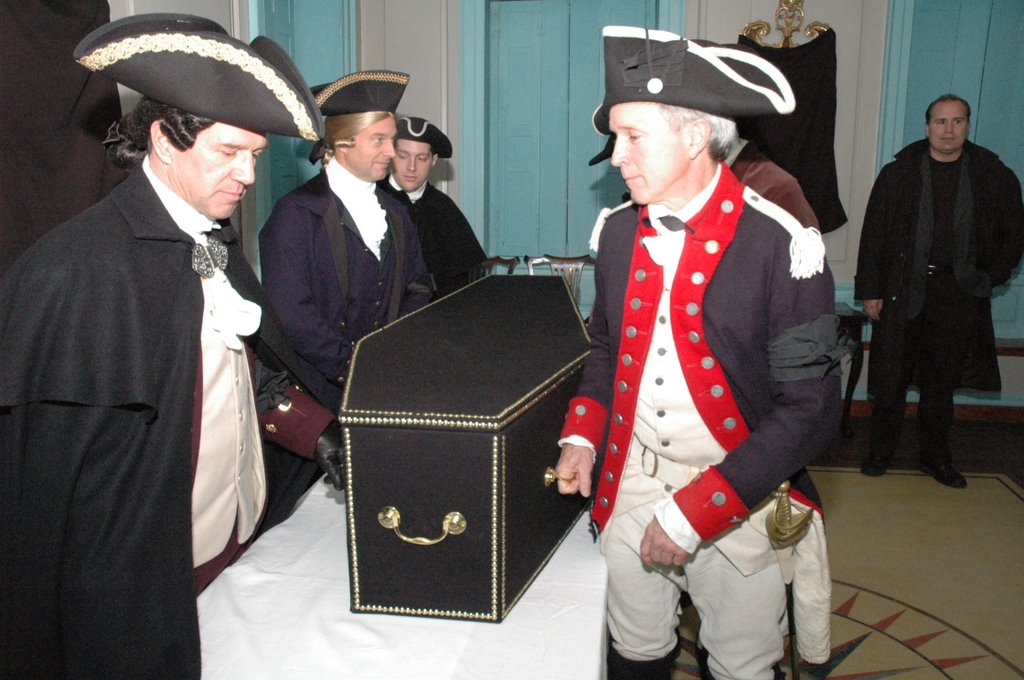 One of our most creative efforts to engage the public in history is our October exhibit on death and mourning practices of the 18th Century held at the Carlyle House in Alexandria. This exhibit focuses on the death of John Carlyle, one of the early civic and business leaders in colonial Alexandria. This seasonal program concludes with a reenactment of John Carlyle's funeral. This year this event takes place on Saturday October 28th from 6:00 - 9:00 P.M.
Innovation in Government
 Recently, the Northern Virginia Regional Park Authority (NVRPA) applied for the Harvard School of Government's Innovation in Government Award. It will take some time to find out how we did against the considerable national competition. Whether we win this award or not, clearly we have many innovative initiatives taking place at the Regional Park Authority.
NVRPA operations are roughly 80% self funded. Because so little of our operating revenues come from tax dollars, we have become very entrepreneurial. Close to 30% of our operating revenues come from our two campgrounds and three golf courses.
To improve our services we identified new value added features/services appreciated by our customers. As a consequence, park usage and revenue improved significantly. We created a golf membership program encouraging frequent players to purchase season passes for unlimited play (priced to promote play during non-peak demand times) at NVRPA courses. Augmented by an aggressive marketing program, including ads in golfing publications and local newspapers, wide distribution of a new brochure and use of Virginia Tourism assets, play at all NVRPA golf courses dramatically improved. A 12.78 % increase in golf rounds over the previous year resulted.
Camping is another core service that experienced dramatic usage and financial improvement as a result of enhanced features. At our two campgrounds, we added rustic cabins, expanded hook-ups for recreational vehicles and wireless internet access. These new features allow the public to select from a wider range of camping experiences and comfort levels. The new amenities were marketed through print ads, the internet and camping directories. NVRPA developed and widely distributed captivating literature promoting family camping near the nation’s capital. An increase of 8,997 campers over the previous year and an income increase of $134,975 (18.46% annual increase) were realized. These are examples where innovation is transforming NVRPA, allowing us to respond to the public need for more recreational opportunities at an affordable price. NVRPA is pursuing many other managerial, partnership and technology initiatives, permitting the agency to live into its mission and affect a futuristic plan for obtaining more parkland in Northern Virginia.
Monday, August 21, 2006
Use of W&OD Trail on the Rise
On Agust 18th the Washington Post ran a front page story titles Bicycling on Popular W&OD Trail No Longer a Breeze. This story focused on the increased use of the W&OD trail and several cycling accidents over the last year an a half. Below is a letter to the editor that I sent in response to this article.
Dear Editor of the Washington Post,
Your August 18th article about cycling on the W&OD Trail and other popular trails in our area pointed out how many more trail users there are today than in the past. In the most recent park needs survey in Fairfax County, 54% of households had used walking/biking trails in the last 12 months, and 64% of households expressed a need for such amenities in the future. With interest in trail use on the rise at the same time our population continues to grow in Northern Virginia, it is little wonder that so many trail users are finding their way to the W&OD. This is the premier multi-use recreational trail in our region, stretching 45 miles from Arlington to Purcellville. In many ways the W&OD is the community commons for Northern Virginia. It links our communities, creates opportunities for healthy recreation, and is a unifying thread through a very diverse region. It is great news that so many in our area are making healthy choices to increase their physical activity, spend time outside with family and friends, and seek clean alternatives to our congested roads. Expanding use of the W&OD and other trails in the region argue for more interconnected trails making non-motorized travel easier.
I appreciate the Post highlighting trail rules and etiquette. Following these simple guidelines will enhance the experience of all the users of the trail, from equestrians, walkers, skaters, and cyclists. It is also very important to note that the four accident related fatalities in the trail’s 31 year history were all the result of cyclist riding into cross streets without stopping at posted signs. The Northern Virginia Regional Park Authority has installed stop ahead, and stop signs at every cross street, this fall we will be adding rumble strips and large lettering on the trail surface letting cyclists and other trail users know that they are approaching a cross street and need to stop and pay attention to road traffic. We are also working with the Virginia DOT to improve the safety of these crossings, with better signage, and grade separated crossings or traffic lights wherever feasible.
Even with the inherent risks of crossing streets, the Trail is a very safe place to recreate. I have cycled long stretches of the W&OD with my young daughter on the back of my bike and never felt the trail offered anything less than a family friendly place to recreate with beautiful scenery and interesting lessons in history.
For a complete list of rules and tips for playing it safe along the W&OD trail, I would encourage your readers to visit the Northern Virginia Regional Park Authority website at http://www.nvrpa.org/.
Dear Editor of the Washington Post,
Your August 18th article about cycling on the W&OD Trail and other popular trails in our area pointed out how many more trail users there are today than in the past. In the most recent park needs survey in Fairfax County, 54% of households had used walking/biking trails in the last 12 months, and 64% of households expressed a need for such amenities in the future. With interest in trail use on the rise at the same time our population continues to grow in Northern Virginia, it is little wonder that so many trail users are finding their way to the W&OD. This is the premier multi-use recreational trail in our region, stretching 45 miles from Arlington to Purcellville. In many ways the W&OD is the community commons for Northern Virginia. It links our communities, creates opportunities for healthy recreation, and is a unifying thread through a very diverse region. It is great news that so many in our area are making healthy choices to increase their physical activity, spend time outside with family and friends, and seek clean alternatives to our congested roads. Expanding use of the W&OD and other trails in the region argue for more interconnected trails making non-motorized travel easier.
I appreciate the Post highlighting trail rules and etiquette. Following these simple guidelines will enhance the experience of all the users of the trail, from equestrians, walkers, skaters, and cyclists. It is also very important to note that the four accident related fatalities in the trail’s 31 year history were all the result of cyclist riding into cross streets without stopping at posted signs. The Northern Virginia Regional Park Authority has installed stop ahead, and stop signs at every cross street, this fall we will be adding rumble strips and large lettering on the trail surface letting cyclists and other trail users know that they are approaching a cross street and need to stop and pay attention to road traffic. We are also working with the Virginia DOT to improve the safety of these crossings, with better signage, and grade separated crossings or traffic lights wherever feasible.
Even with the inherent risks of crossing streets, the Trail is a very safe place to recreate. I have cycled long stretches of the W&OD with my young daughter on the back of my bike and never felt the trail offered anything less than a family friendly place to recreate with beautiful scenery and interesting lessons in history.
For a complete list of rules and tips for playing it safe along the W&OD trail, I would encourage your readers to visit the Northern Virginia Regional Park Authority website at http://www.nvrpa.org/.
Wednesday, August 16, 2006
Governor focuses on Environmental Challenges
Governor Kaine will be hosting a Natural Resources Leadership Summit this year to tackle some of the most challenging environmental issues of the Commonwealth. The Summit will deal with four issue areas:
- Land Conservation
- Outdoor Recreation, Fisheries & Wildlife Resources
- Water Quality and Water Resources
- Air Quality
The goals will be to both generate creative ideas for solving these challenges, and building a degree of consensus in the environmental community on what resources are needed to achieve these goals.
In 2003, Governor Warner held a similar Summit that resulted in a high degree of success. In 2003, there also was significant underfunding of state agencies with environmental responsibility like the Department of Environmental Quality (DEQ), the Department of Conservation and Recreation (DCR), the Department of Forestry and others. That issue has improved since 2003. One of the largest challenges today is land conservation.
The Chesapeake Bay 2000 agreement has a number of specific goals that the states of the Bay Region agreed to meet by 2010. One of these goals is to preserve 20% of the land in the Chesapeake Bay watershed. With just three years to go, Virginia has some catching up to do. Governor Kaine has set a goal of conserving 400,000 acres between now and 2010. Achieving this goal will help assure that Virginia meets its Chesapeake Bay agreements.
The best way to advance all of the environmental concerns on the Governor's list is to acquire more parkland next to our streams, rivers and lakes. Forested buffers to bodies of water provide a natural filter for pollutants that would otherwise be washed into our waterways. Parkland next to waterways provides some of the best trail and boating opportunities for the public, as well as connected wildlife habitat. And mature forests are an excellent filter for our air quality.
These are not new ideas. In the 1960s, the Northern Virginia Regional Park Authority acquired over twenty miles of parkland along the north shore of the Bull Run/Occoquan Rivers. This parkland provides fantastic recreational opportunities for boating, hiking, camping and other activities, in addition to being an important natural filter to the Occoquan Reservoir, which is the drinking water source for 1.3 million people. The Regional Park Authority also owns 13 miles of parkland along the Potomac River, which protects our drinking water and provides numerous recreational opportunities.
There are other ways to achieve some of the environmental benefits that we need, but I know of no better solution than expanding public parkland to reach our goals in land conservation, water quality, outdoor recreation and habitat enhancement all at the same time. The challenge will be to find new ways of funding parkland expansion. We have not had a state park bond since 2002. Local park expansion is usually funded with local bonds that need to compete with other public needs like schools, public safety and other local government priorities. Are there other potential revenue sources that could be targeted to meet these goals? How do we best coordinate and prioritize state, regional and local efforts at parkland expansion to get the greatest environmental and recreational impact? Whatever the answer is to these and other questions, it is helpful to have the Governor bring a focus and priority to these issues.
Tuesday, August 01, 2006
New Funds for Park Expansion
The Northern Virginia Regional Park Authority (NVRPA) was awarded a grant from the Virginia General Assembly in the amount of $125,000. The grant will help fund parkland acquisition.
“We are focused on growing the park system in Northern Virginia,” stated NVRPA Chairman Bill Dickinson. “Just this year, we acquired historic Aldie Mill a 19th century gist mill in Loudoun County from the Virginia Outdoor Foundation. Our organization is involved in a number of negotiations regarding land gifts and bargain sales aimed at expanding our land holdings. This grant will help us to expand the 10,000-acre park system that NVRPA operates in Loudoun, Fairfax and Arlington Counties and the Cities of Falls Church, Fairfax and Alexandria.”
”Conserving our important historic sites and natural areas is vitally important to our quality of life,” remarked Delegate Vince Callahan, Chairman of the House Appropriations Committee. “We are fortunate to have a strong regional park system. I was pleased to help appropriate additional funds so the Northern Virginia Regional Park Authority can continue to expand and serve the public,” continued Callahan.
Delegate Joe May, who also serves on the House Appropriations Committee added, “being able to support parks that will be used by millions of area residents over time, is one of the most rewarding parts of serving in the General Assembly. I was happy to help pass this appropriation for the Northern Virginia Regional Park Authority.”
“Conserving land is a team sport. We are very grateful to have the partnership and support of the General Assembly to assist our effort to expand the parkland of our region,” said Paul Gilbert, Executive Director of the Northern Virginia Regional Park Authority.
“We are focused on growing the park system in Northern Virginia,” stated NVRPA Chairman Bill Dickinson. “Just this year, we acquired historic Aldie Mill a 19th century gist mill in Loudoun County from the Virginia Outdoor Foundation. Our organization is involved in a number of negotiations regarding land gifts and bargain sales aimed at expanding our land holdings. This grant will help us to expand the 10,000-acre park system that NVRPA operates in Loudoun, Fairfax and Arlington Counties and the Cities of Falls Church, Fairfax and Alexandria.”
”Conserving our important historic sites and natural areas is vitally important to our quality of life,” remarked Delegate Vince Callahan, Chairman of the House Appropriations Committee. “We are fortunate to have a strong regional park system. I was pleased to help appropriate additional funds so the Northern Virginia Regional Park Authority can continue to expand and serve the public,” continued Callahan.
Delegate Joe May, who also serves on the House Appropriations Committee added, “being able to support parks that will be used by millions of area residents over time, is one of the most rewarding parts of serving in the General Assembly. I was happy to help pass this appropriation for the Northern Virginia Regional Park Authority.”
“Conserving land is a team sport. We are very grateful to have the partnership and support of the General Assembly to assist our effort to expand the parkland of our region,” said Paul Gilbert, Executive Director of the Northern Virginia Regional Park Authority.
Subscribe to:
Posts (Atom)